
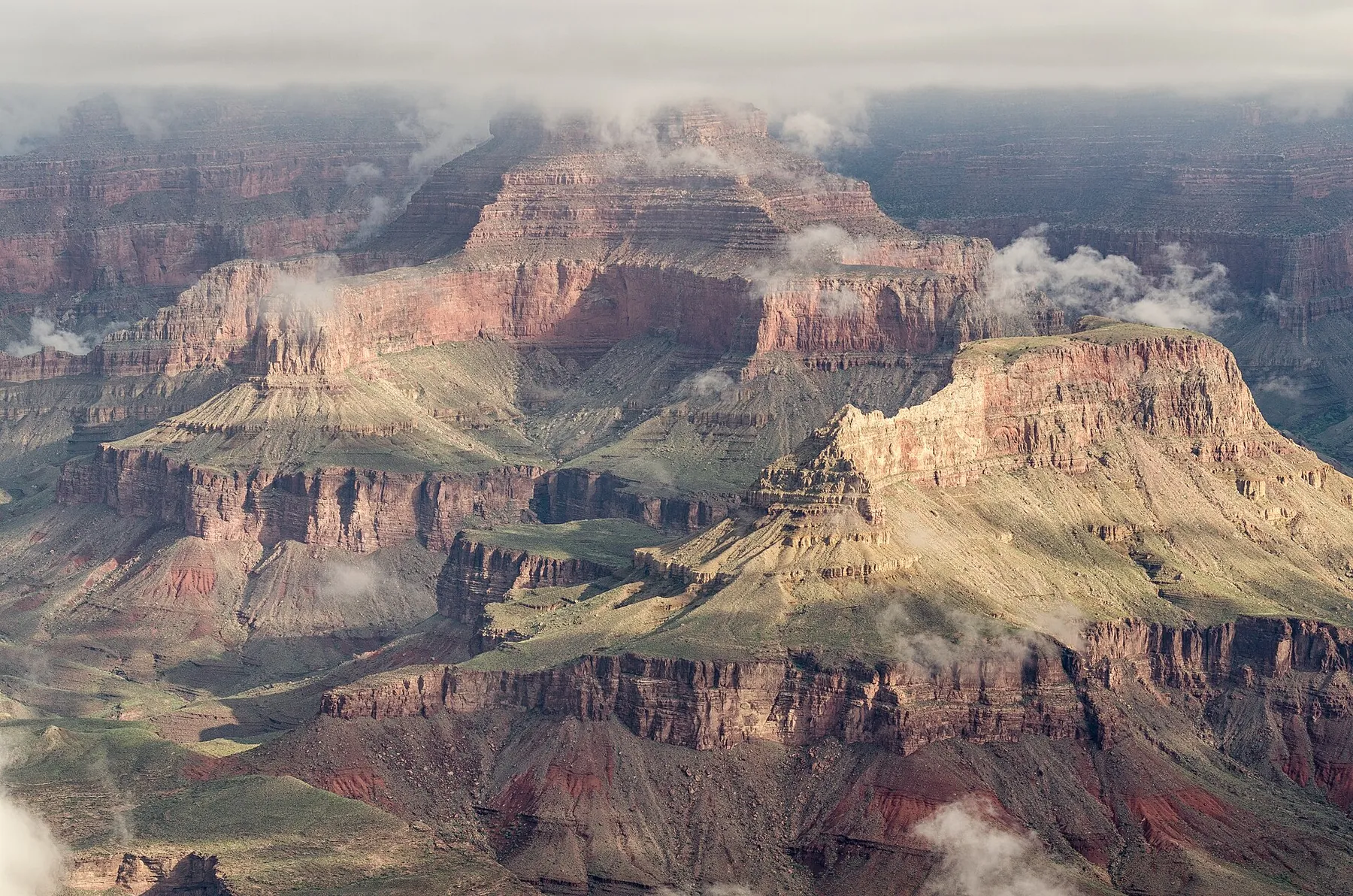
 Photo: Tuxyso, CC BY-SA 3.0
Since 1 January 2026, visiting the Grand Canyon costs foreign travellers considerably more than before. On top of the usual entrance fee, the National Park Service now charges a $100 fee to every visitor aged 16 or over who is not a US resident. This guide sets out what you pay at the South Rim in 2026, who pays the new fee, and when an annual pass is the cheaper option.
All figures below are taken from the official park pages as of October 2026. Fees can change: check the park's fees page before you go.
The short answer
- Entrance: $35 per private vehicle, $30 per motorcycle or $20 per person on foot or by bike. The pass is valid for seven days.
- Nonresident fee: $100 per person aged 16 and over who is not a US resident, in addition to the entrance fee.
- The exception: if you enter with an annual pass, such as the America the Beautiful nonresident pass at $250, you do not pay the $100.
- Children under 16 pay neither fee.
- Cards only. The park does not accept cash.
Entrance fees at the South Rim (as of October 2026)
| Pass (valid 7 days) | Price | Covers |
|---|---|---|
| Private vehicle | $35 | One private, non-commercial vehicle and everyone in it, up to a 15-passenger van |
| Motorcycle | $30 | Up to two private motorcycles with up to four people |
| Individual | $20 | One person on foot or by bike, aged 16 or over |
The same pass covers the whole park, including the North Rim, and lets you come and go for seven days. It also covers the free park shuttles on the South Rim, which you will need for Hermit Road: from 1 March to 30 November 2026 the road is closed to private cars, and only the red shuttle and commercial tours run along it.
The $100 nonresident fee
The new fee applies at 11 of the most visited national parks, including the Grand Canyon, Zion, Bryce Canyon, Yosemite and Yellowstone, according to Backpacker. At the Grand Canyon it works like this:
- Who pays: visitors aged 16 or over who are not US residents. It is $100 per person, not per vehicle.
- When it does not apply: when you enter with an annual pass or an America the Beautiful pass.
- On tours: it also applies to nonresidents on commercial tours. The town of Tusayan's visitor site notes that tour operators are expected to check residency before you arrive, so ask whether the tour price includes it.
- Date of entry counts, not booking date. If you booked a tour in 2025 for a date in 2026, the fee still applies.
- How residency is checked: US residents show an ID such as a driver's licence. Nonresidents are not asked to carry a passport or birth certificate to prove their age, according to Tusayan's visitor information.
Other National Park Service sites in Arizona do not charge the fee. Petrified Forest National Park, for example, lists $25 per vehicle and no separate nonresident charge.
When the annual pass pays off
The America the Beautiful pass covers entrance fees at national parks and other federal sites for a year. For non-US residents it costs $250; for US residents it is $80. According to Tusayan's visitor site, the nonresident pass covers all entrance and nonresident fees for the holder and up to three other people aged 16 or over. Here is what a single visit to the South Rim costs a group of foreign travellers in one car, with and without it (our own arithmetic from the official prices):
| Adults (16+) in the car, all nonresidents | Without the pass | With the $250 pass |
|---|---|---|
| 1 | $35 + $100 = $135 | $250 |
| 2 | $35 + $200 = $235 | $250 |
| 3 | $35 + $300 = $335 | $250 |
| 4 | $35 + $400 = $435 | $250 |
The pattern is clear:
- One adult, one park: pay at the gate. The pass costs nearly twice as much.
- Two adults: almost a tie at the Grand Canyon alone. If you visit any other park that charges the nonresident fee in the same year, such as Zion or Bryce Canyon on a Southwest road trip, the pass wins easily.
- Three or four adults: the pass is cheaper even for the Grand Canyon on its own.
- Children under 16 do not change the sums: they pay neither fee.
The Grand Canyon's own $70 annual pass is sold only to US citizens and residents, so it is not an option for most foreign visitors. Passes bought in 2025 are not affected by the change and remain valid for 12 months from purchase.
How and where to pay
- At the park: the South Entrance station, the Desert View (East) entrance station and Mather Campground sell and upgrade passes. The Grand Canyon Visitor Center near Mather Point does not sell passes.
- Before you go: you can buy the America the Beautiful pass online through recreation.gov as a digital pass, or order a physical card from the USGS online store.
- Cards only. Have a credit or debit card that works in the US. There is no cash option.
If you arrive at the South Entrance early in the morning, having the pass already makes the stop at the gate quicker.
Fee-free days in 2026
The park lists eight fee-free days in 2026: 16 February, 25 May, 14 June, 3–5 July, 25 August, 17 September, 27 October and 11 November. In 2026 these free days apply only to US citizens and residents. If you are visiting from abroad, do not plan your trip around them.
The North Rim in 2026
The Dragon Bravo fire, started by lightning on 4 July 2025, destroyed about 70 structures on the North Rim, including the Grand Canyon Lodge, the visitor centre and many historic cabins. As of October 2026, the National Park Service says there is no overnight lodging on the North Rim in the 2026 season. The rim is open until 30 November 2026 or the first major snowstorm, and Phantom Ranch, at the bottom of the canyon, is closed, as is the North Kaibab Trail between the trailhead and Phantom Ranch. The entrance fee and the nonresident fee are the same as on the South Rim. The two rims are 212 miles (341 km) and about four and a half hours apart by road. Check the North Rim status page before planning a visit.
Other things worth knowing
- The Tusayan shuttle is not running. As of October 2026, the free purple shuttle from Tusayan into the park is out of service and is due back in summer 2027, so if you stay in Tusayan you will drive through the gate yourself.
- The train does not include entry. If you ride the Grand Canyon Railway from Williams, the park's entrance rules still apply to train passengers; ask the railway how the fees are charged when you book.
- Permits are separate. Day hikes need no permit. Camping below the rim needs a backcountry permit, applied for by lottery on recreation.gov.
- Drones are banned throughout the park.
Planning your visit
Once the fees are sorted, the next decision is where to sleep. Our comparison of Tusayan, Williams or Flagstaff looks at the drive to the rim from each, and where to stay for the Grand Canyon and Route 66 covers the Route 66 towns as well. If you are combining the canyon with the old road, see our Route 66 road trip from Kingman to Holbrook.
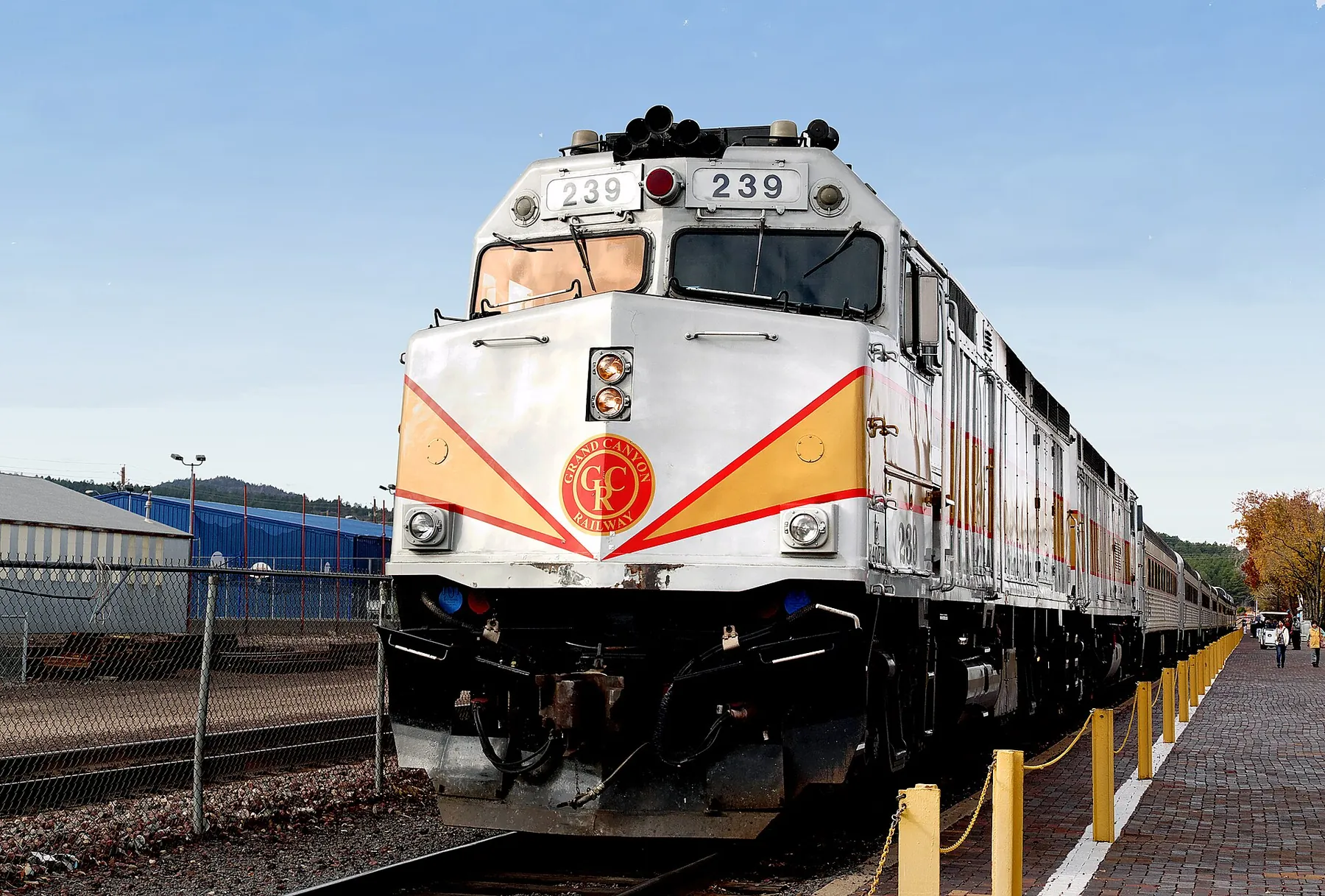 Photo: Bernard Spragg. NZ from Christchurch, New Zealand, CC0
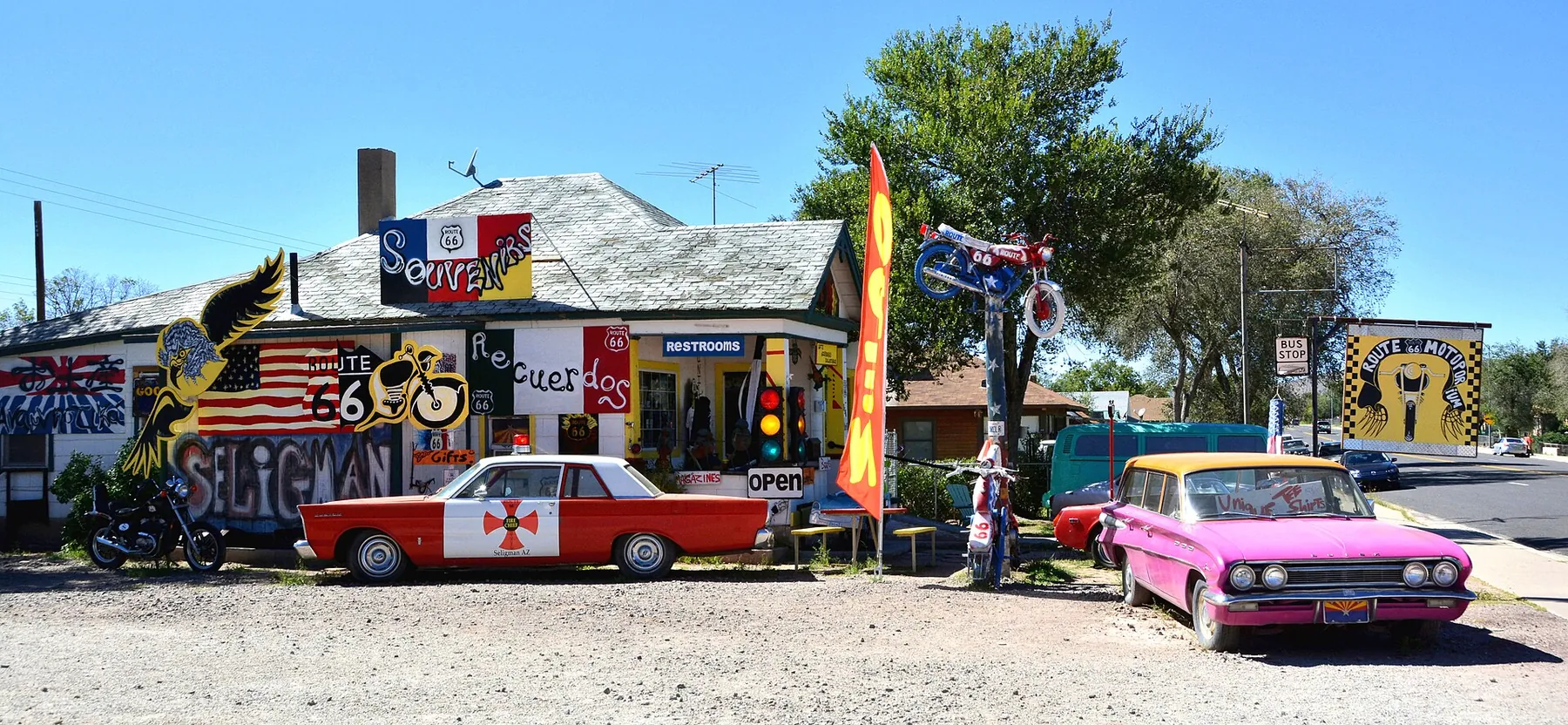 Photo: Mike McBey, CC BY 2.0
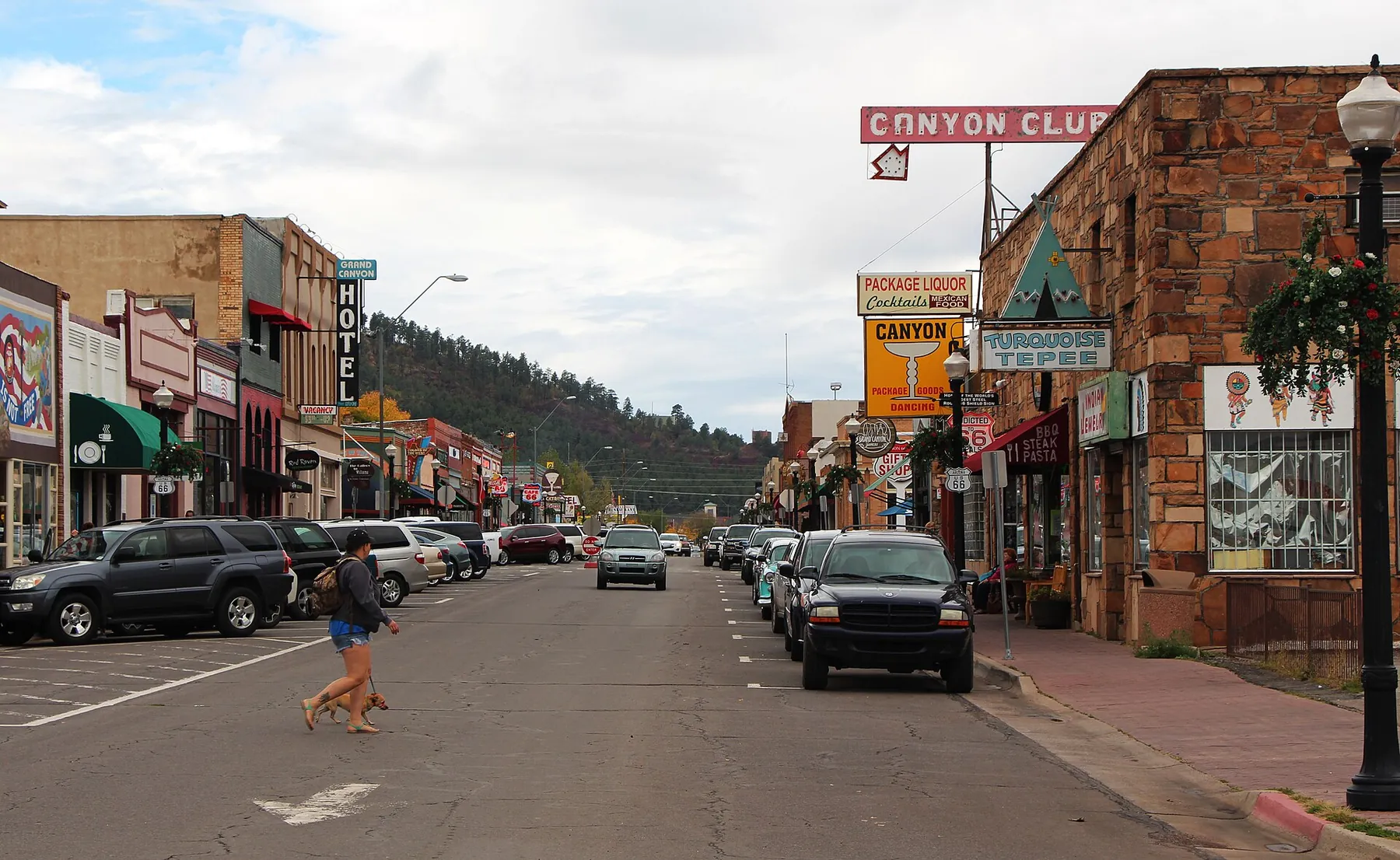 Photo: Steven C. Price, CC BY-SA 4.0