
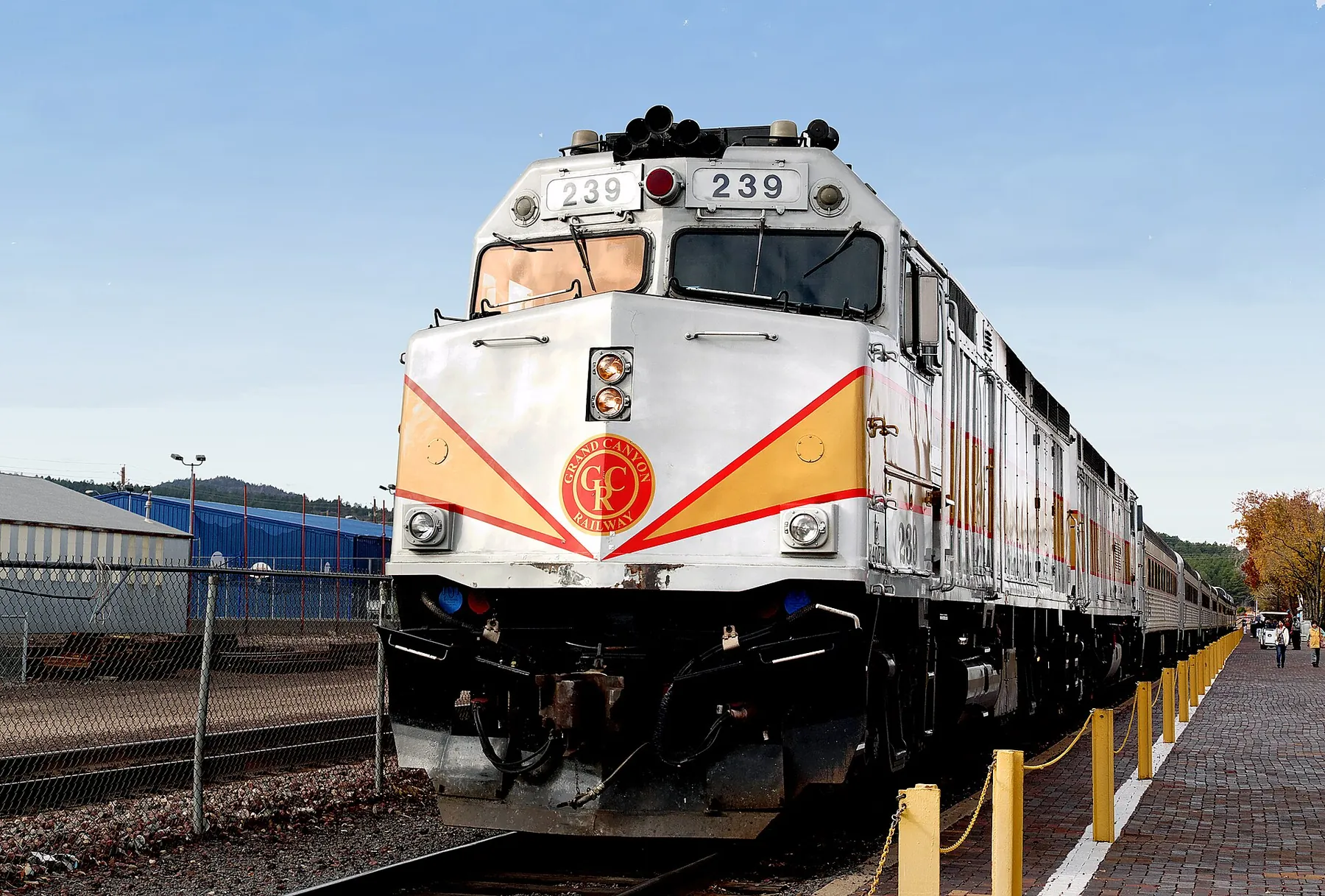
 Photo: Bernard Spragg. NZ from Christchurch, New Zealand, CC0
The Grand Canyon Railway runs once a day from Williams, a small town on Route 66, to the heart of Grand Canyon Village on the South Rim. It takes longer than driving, and it leaves you only a few hours at the canyon, but it removes the drive, the queue at the gate and the hunt for parking. This guide covers the timetable, the classes of service, what you can do with your time at the rim, and who the train suits.
Times below are from the railway's own timetable as of October 2026. Fares change with the season and with promotions, so check them on thetrain.com when you book.
The short answer
- One train a day in each direction for most of the year: leave Williams at 9:30, back at 17:45 (January to October). In November and December it runs an hour earlier.
- 65 miles (105 km), about 2 hours 15 minutes each way.
- More than three hours at the rim, arriving at the Grand Canyon Depot, about 200 yards (180 m) from the edge.
- Park entrance is not included in the train fare; the park's fees and rules still apply.
- Best for: travellers without a car, families, anyone who would rather not drive, and Route 66 travellers staying in Williams.
Timetable (as of October 2026)
| Dates | Leave Williams | Arrive Grand Canyon | Leave Grand Canyon | Arrive Williams |
|---|---|---|---|---|
| 1 January – 31 October | 9:30 | 11:45 | 15:30 | 17:45 |
| 1 November – 31 December (no train on 25 December) | 8:30 | 10:45 | 14:30 | 16:45 |
On a few high-demand dates in spring, a second train leaves Williams at 10:30. In 2026 these were in mid and late March and early April, so if you are travelling then, check whether there is a second departure. Arizona does not change its clocks in summer, so the times stay the same all year.
Before the morning departure there is a short Wild West shootout show at the Williams depot, which is part of the experience whether you want it or not. Most trains are pulled by diesel locomotives from the 1950s and 1970s. On selected dates a historic steam locomotive pulls the train instead; the last steam date listed for 2026 is 14 October, and the railway warns that steam trips can be cancelled at short notice.
Classes of service
The railway offers six ways to ride. Its press fact sheet describes them like this (in our words):
| Class | What it is |
|---|---|
| Pullman | Vintage cars with seats that flip so groups of four can face each other; spring and summer only |
| Coach | Climate-controlled Budd coaches from the streamliner era, the standard choice for most families |
| First Class | Larger seats, with drinks and snacks |
| Observation Dome | A second-storey glass dome for wider views; no children under 2 |
| Luxury Dome | A full-length dome car for passengers aged 16 and over |
| Luxury Parlor | Two parlour cars; one of them, The Chief, has an open-air rear observation platform |
According to a 2026 rider's guide by American-Rails, adult coach fares commonly start in the high $60s to $80s, depending on the season and promotions, and premium classes can run well above $150 per adult. Treat those figures as a rough guide and check the current price for your date.
Which class to choose depends mostly on how much you value the views on the way. The line runs through high desert and ponderosa forest rather than along the canyon, so the window seat matters less than on many scenic railways; the canyon itself only appears when you walk from the depot to the rim. Coach is the value choice. The dome cars are worth it if you want the journey to be part of the day rather than just transport.
Entrance fees and the train
The fare covers the train, not the park. The railway's own fact sheet does not mention park entry, and American-Rails notes that park entry rules and pass requirements still apply for the rim visit. That includes the $100 nonresident fee introduced in 2026 for visitors aged 16 and over who are not US residents, unless they enter with an annual pass. Ask the railway how entry is charged for train passengers when you book, and read our guide to Grand Canyon entrance fees in 2026 for the details.
What to do with three hours at the rim
The train arrives at the Grand Canyon Depot, built in 1909–1910 and described by the railway as the last operating log depot in the United States. The rim is a few minutes' walk uphill. With just over three hours, you have time for one of these plans, but not all of them:
- Walk the Rim Trail. From the village you can follow the rim in either direction. Part of the trail is paved and accessible, and the free shuttles stop along the way if you tire. Walk west towards the start of Hermit Road or east towards Mather Point, then turn back in time.
- Ride the Hermit Road shuttle. From 1 March to 30 November the road west of the village is closed to private cars and served by the free red shuttle, with nine viewpoints over about 7 miles (11 km) to Hermits Rest, a stone rest house built by Mary Colter in 1914. A round trip with a few stops fits in the time, but watch the clock.
- Take it slowly in the village. The historic buildings and viewpoints around the depot are enough for a relaxed visit, with lunch.
Whatever you do, keep a margin for getting back to the depot: the train will not wait. And do not try to hike down into the canyon and back in the time you have; the park warns against trying to reach the river and back in a day, and that applies all the more on a train schedule.
Is the train worth it?
Choose the train if:
- You do not have a car, or you would rather not drive mountain roads after a long trip.
- You are travelling with children, who tend to enjoy the show and the ride itself.
- You are staying in Williams anyway, perhaps on a Route 66 trip.
- You want to avoid the gate and parking on busy days.
Drive instead if:
- You want sunrise or sunset at the rim. The train arrives late morning and leaves mid-afternoon, so you will see the canyon in the flattest light of the day.
- You want more than three hours. By car from Williams the South Rim is about an hour away, according to the National Park Service, so you can spend the whole day there.
- You are travelling as a group of adults on a budget: one car pass covers everyone in the car, while every train ticket is per person.
A middle way is to drive to the rim on one day for sunrise or sunset and take the train on another, or to stay at the rim for a night and ride the train only one way; ask the railway what it currently offers.
Practical notes
- Arrive early at the Williams depot to park, check in and collect tickets.
- Christmas trains. From late November through December, Williams runs the Polar Express evening trains for families. They are separate from the daytime canyon train, but they fill many of the town's hotels, so book early if you are visiting then.
- Getting to Williams. Williams sits on Route 66 and I-40, about 44 miles (71 km) west of Flagstaff. If you are staying in Flagstaff, allow time for the drive before a 9:30 departure.
- Dress for altitude. The South Rim is high and cold for much of the year: nights drop below freezing from about mid-October, according to James Kaiser's guide. Bring a warm layer even on a sunny day.
Where to stay
The train makes Williams the most practical base if you want to see the canyon without driving. For the trade-offs between Williams, Tusayan at the park gate and Flagstaff, read Tusayan, Williams or Flagstaff and our guide to where to stay for the Grand Canyon and Route 66.
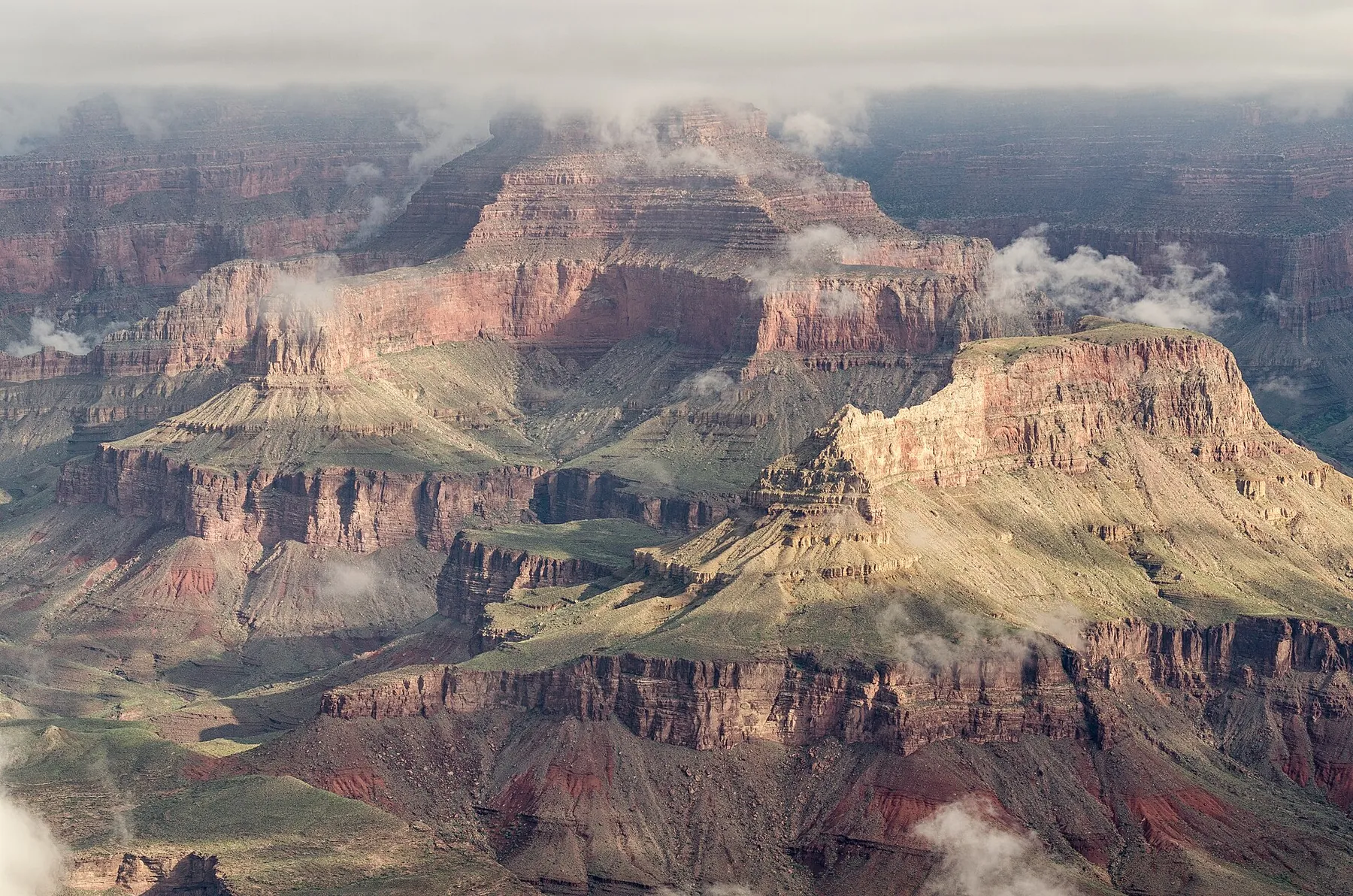 Photo: Tuxyso, CC BY-SA 3.0
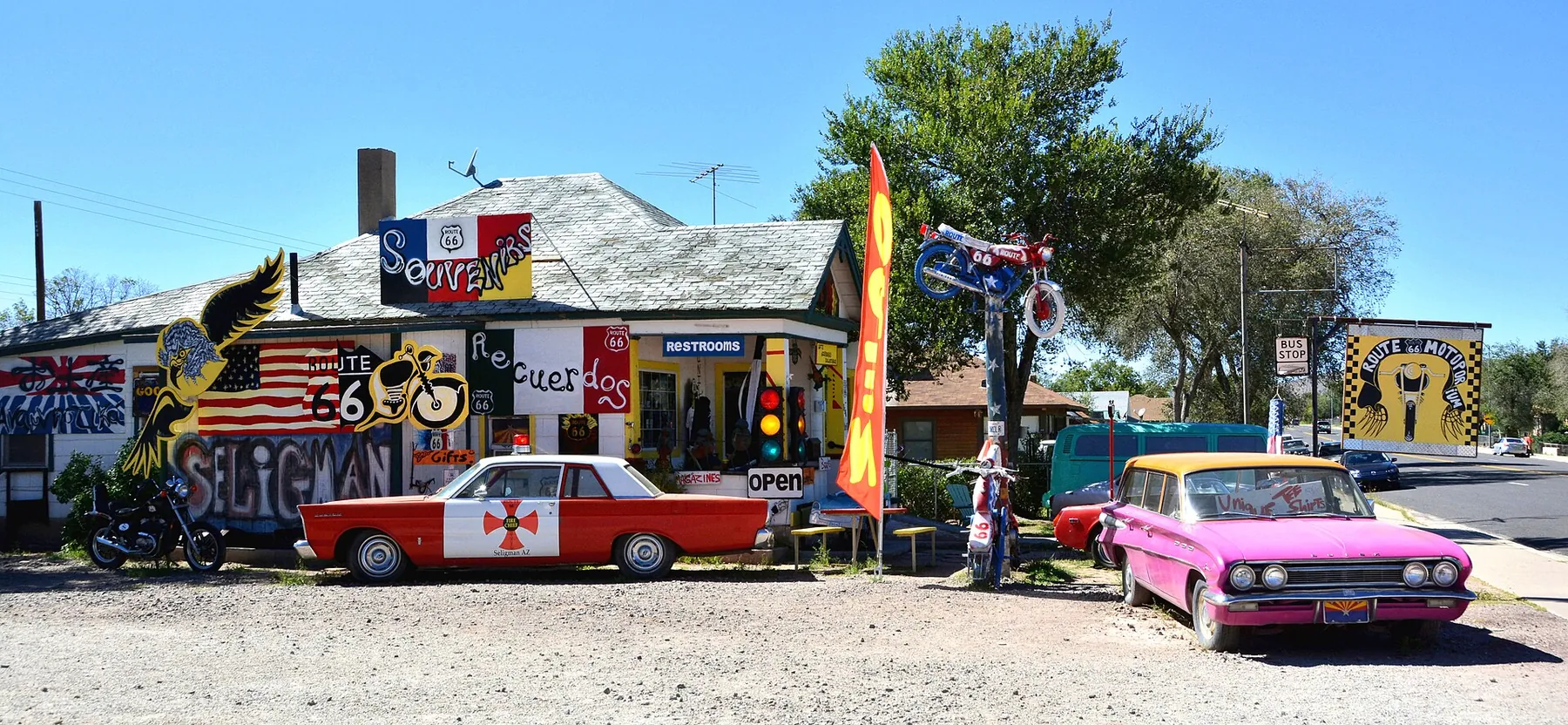 Photo: Mike McBey, CC BY 2.0
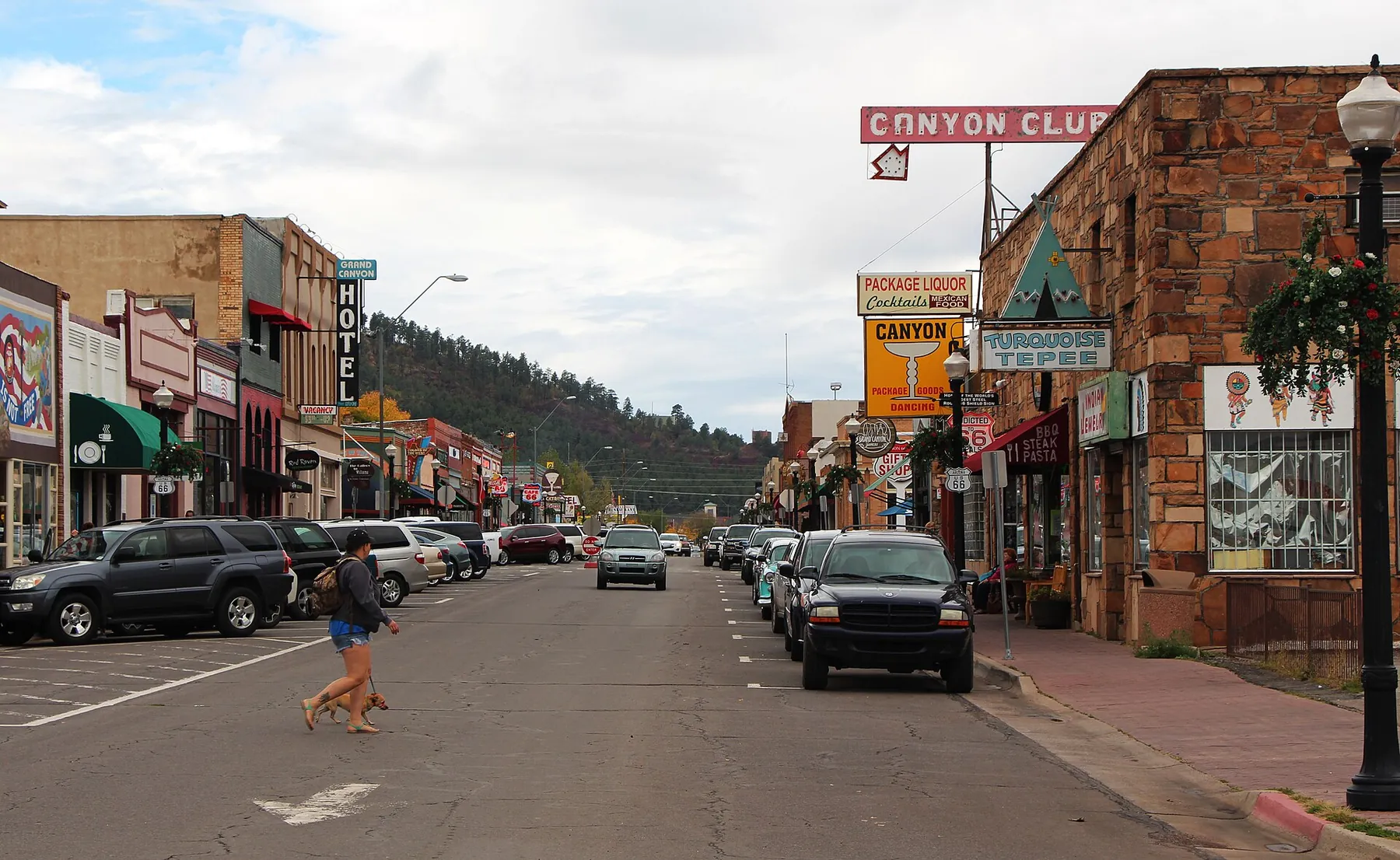 Photo: Steven C. Price, CC BY-SA 4.0