
 Photo: Steven C. Price, CC BY-SA 4.0
Most visitors to the South Rim of the Grand Canyon sleep in one of three places: Tusayan, at the park gate; Williams, an hour south on Route 66; or Flagstaff, the largest town in northern Arizona, about an hour and a half away. The lodges inside the park are closer still, but they are few and book up early. This guide compares the three towns on the things that decide the choice: time to the rim, price, what there is to do in the evening, and how each fits the rest of your trip.
Drive times are from the National Park Service and the other sources listed at the end. Prices are snapshots from Kayak and Priceline as of October 2026; they change by the week, so treat them as a guide to the difference between towns rather than as quotes.
The short answer
- Tusayan if seeing the canyon at sunrise or sunset is the point of the trip, or if you only have one night.
- Williams if you want to ride the Grand Canyon Railway, are driving Route 66, or want lower prices with the canyon an hour away.
- Flagstaff if you want a real town with restaurants and other things to do, and are happy to visit the canyon as a day trip.
- Two or three nights? Many travellers split them: one night in Tusayan or the park for sunrise, the rest in Williams or Flagstaff.
Side by side
| Tusayan | Williams | Flagstaff | |
|---|---|---|---|
| Distance to the South Entrance | about 6 miles (10 km) | about 60 miles (97 km) | about 79 miles (127 km) |
| Drive to the South Rim | about 15 minutes | about 1 hour | about 1.5 hours |
| Route | AZ-64 north | AZ-64 north | US-180 north via Valle |
| Sunrise or sunset at the rim | easy | early start or late drive | long drive in the dark |
| Evening life | very little | small Route 66 main street | lively downtown, many restaurants |
| Price level | highest | lower, wide range | wide range |
| Also good for | nothing else nearby | the train, western Route 66 | eastern Arizona, Petrified Forest |
Sources: National Park Service (Tusayan and Williams distances, Williams and Flagstaff times), Travels with Elle (Tusayan time) and James Kaiser (Flagstaff distance and route). The National Park Service gives 90 minutes from Flagstaff.
Tusayan: at the gate
Tusayan is a short strip of hotels, petrol stations, restaurants and a general store on AZ-64, just south of the South Entrance. The National Park Service puts the entrance 6 miles (10 km) north of town, and the town's own visitor site says Tusayan is 1 mile from it; either way, it is a few minutes' drive. There is nothing else to see in Tusayan. It exists to serve the park.
Why stay here. Time. Sunrise at Mather Point, an evening walk on the Rim Trail and dinner afterwards are all realistic from Tusayan. You can also enter the park early, before the queue builds at the gate, and leave late without facing an hour on dark roads.
What it costs. This is the most expensive base. Kayak's figures for Tusayan hotels, checked in October 2026, put the cheapest month at February, at around $138 a night, and the most expensive at October, at around $445. Inside the park, Kayak's "from" prices for mid-October dates ran from about $260 to about $750 a night, depending on the lodge.
One thing that changed in 2026. The free Tusayan (purple) shuttle into the park is not running as of October 2026; the park says it returns in summer 2027. Plan to drive in and park.
Best for: one-night visits, photographers, and anyone for whom sunrise or sunset at the rim is the highlight.
Williams: Route 66 and the railway
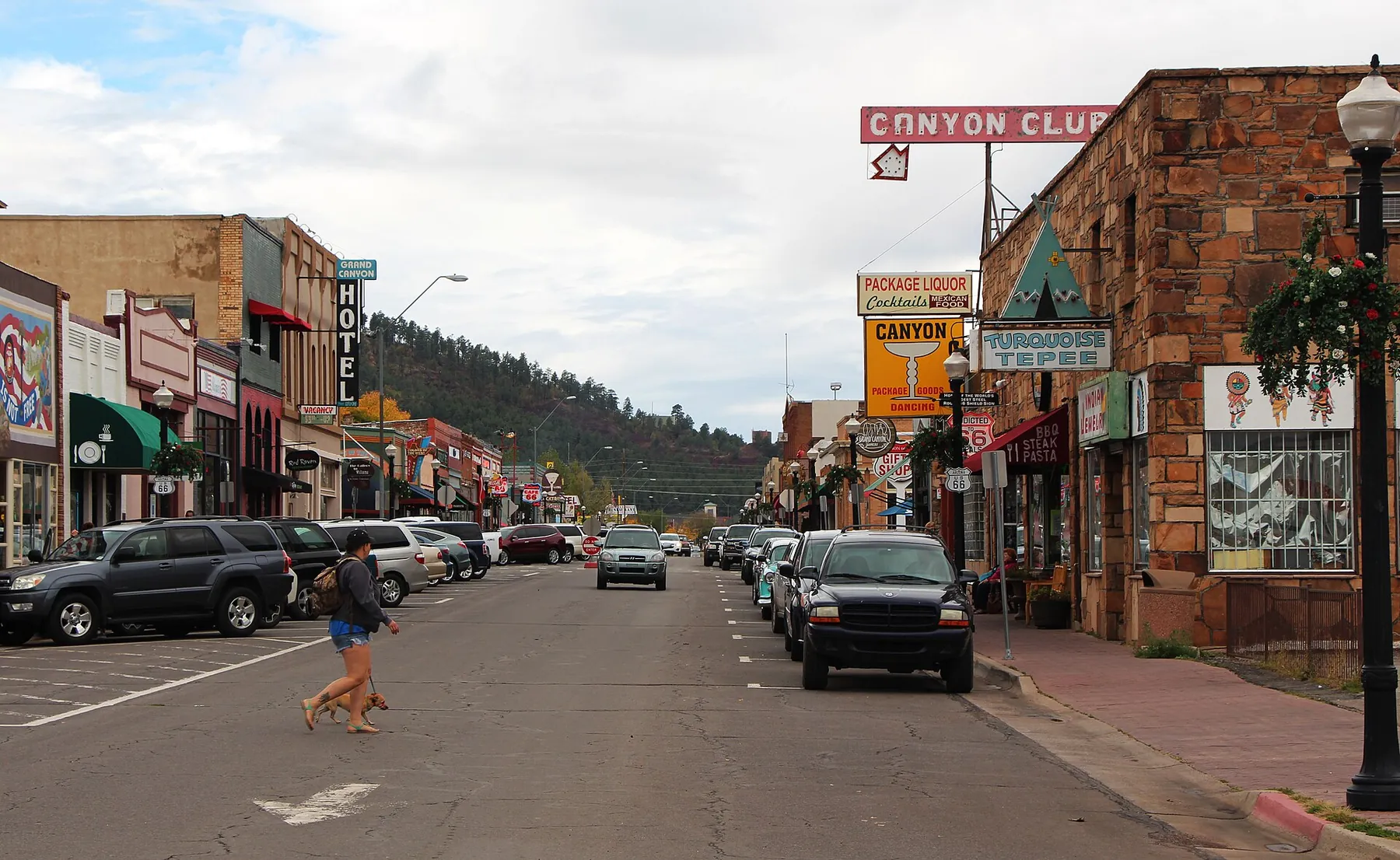
Williams is a small town on Route 66 and I-40, about an hour from the South Rim. Its main street follows the old highway, with diners, neon and souvenir shops, and the town's historic business district is on the National Register of Historic Places. The Grand Canyon Railway leaves from the Williams depot every morning, gives you more than three hours at the rim and brings you back in the evening.
Why stay here. The train, if you would rather not drive; a lively, walkable centre for its size; and prices that are usually well below Tusayan's. It is also on the way if you are driving Route 66 from Kingman and Seligman.
What it costs. On Priceline in October 2026, about 30 properties in Williams were listed from roughly $56 to $370 a night, with most in the lower half of that range. The lowest prices were in February (around $70) and the highest in April and December.
Watch out for: late November and December, when the Polar Express Christmas trains run from Williams in the evenings and fill many of the town's hotels. And remember that sunrise at the canyon from Williams means leaving before dawn for an hour's drive.
Best for: families, travellers without a car who want the train, Route 66 road trips, and budget-minded visitors.
Flagstaff: a town in its own right
Flagstaff sits at about 7,000 ft (2,130 m) in ponderosa pine forest and is the largest town in the region, with a university and a historic downtown on the original Route 66. Lowell Observatory, where Pluto was discovered, is on the hill above the centre, and Flagstaff was the world's first International Dark Sky City. Walnut Canyon, Sunset Crater and Wupatki national monuments are nearby.
Why stay here. Choice. Flagstaff has the widest range of restaurants and places to stay in northern Arizona, from chain hotels to restored Route 66 motor lodges, and enough to do that a rest day does not feel wasted. It is also the natural base if your trip continues east, towards Winslow and the Petrified Forest.
The trade-off. The South Rim is about 79 miles (127 km) away, roughly an hour and a half each way via US-180, so the canyon becomes a day trip. Sunrise or sunset at the rim means driving in the dark at one end of the day. At this altitude, nights are cold for much of the year.
What it costs. We did not find a reliable price snapshot for Flagstaff as a whole; its range is wide, and the large number of hotels usually means more choice at every level.
Best for: travellers who want restaurants and a bit of town life, longer stays in northern Arizona, and trips that combine the canyon with other parks and monuments.
Which one for your trip
- One night, canyon only: Tusayan, or a lodge inside the park if you can find a room. Arrive in the afternoon, watch the sunset, see the sunrise the next morning.
- Two nights with the train: Williams. Take the train on the full day and use the second evening for the main street.
- Three nights or more: split it. One night in Tusayan for the light at the rim, then two in Flagstaff or Williams.
- A Route 66 road trip: Williams on the way east from Kingman, then Flagstaff, then Winslow or Holbrook. See our Route 66 road trip from Kingman to Holbrook.
- Travelling with a dog: pets must stay on a leash of 6 ft (1.8 m) or less and above the rim, and they are not allowed on the park shuttles. Only Yavapai Lodge inside the park has pet-friendly rooms, and there is a kennel. A base with your own car works best.
Seasons and timing
Spring (March to May) and autumn (September to November) are the most comfortable seasons. Summer is the busiest, and from July to mid-September monsoon thunderstorms build most afternoons; plan rim walks for the morning. From about mid-October, nights at the South Rim drop below freezing, and in winter the rim averages about 5 ft (1.5 m) of snow, with highs in the 40s °F (around 4–9 °C). Winter is also the quietest and cheapest time to stay. The South Rim is open all year. Arizona does not use daylight saving time.
Before you book
- Entrance fees. Since 1 January 2026, visitors who are not US residents pay $100 each, aged 16 and over, on top of the $35 vehicle pass, unless they hold an annual pass. See Grand Canyon entrance fees in 2026.
- The North Rim is not an alternative this year. After the 2025 Dragon Bravo fire destroyed the Grand Canyon Lodge, there is no lodging on the North Rim in 2026.
- Getting there. The South Rim is about a four-hour drive from Phoenix, according to the National Park Service, and about four and a half hours from Las Vegas, according to James Kaiser.
For a wider look at the region, including the Route 66 towns east and west, read our guide to where to stay for the Grand Canyon and Route 66. Prices and conditions change: see how we review.
 Photo: Tuxyso, CC BY-SA 3.0
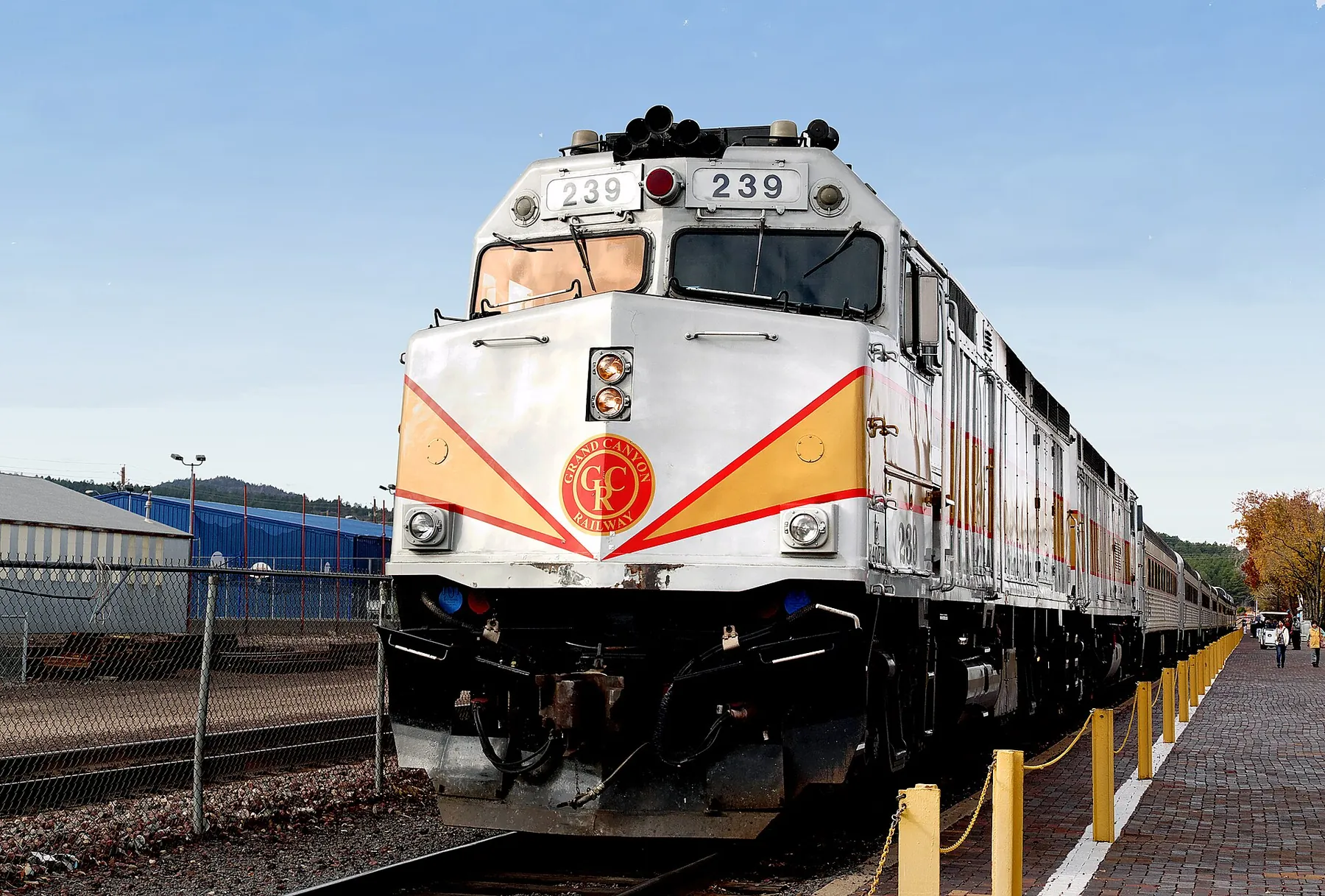 Photo: Bernard Spragg. NZ from Christchurch, New Zealand, CC0
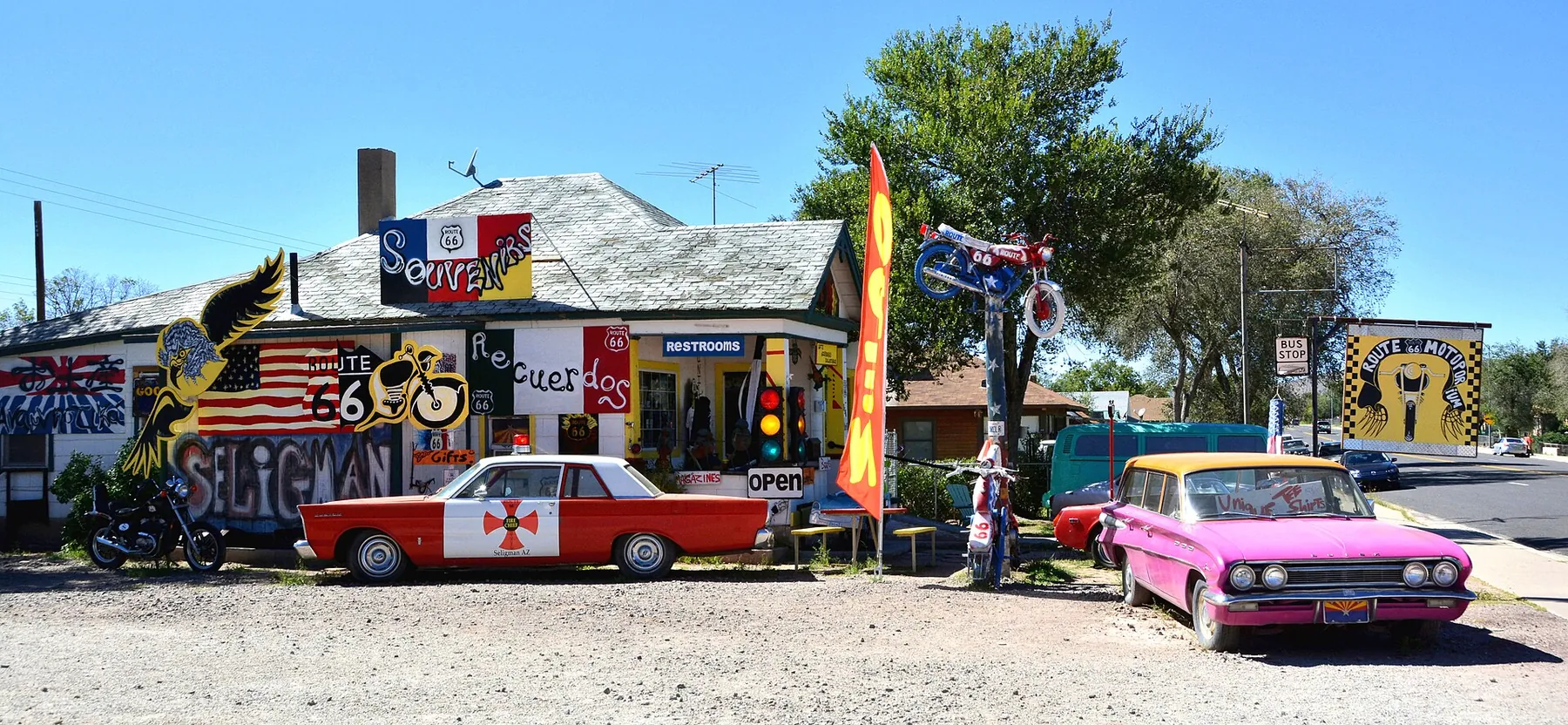 Photo: Mike McBey, CC BY 2.0