
 Photo: Marc Ryckaert (MJJR), CC BY 3.0
Luxor and Aswan sit in one of the hottest and driest parts of the world. It almost never rains, so the question of when to go comes down to two things: heat and crowds. In practice the two pull in opposite directions. The pleasant months, roughly November to February, are also the busiest. The quiet months, June to August, bring daily highs above 40 °C.
This guide sets out the climate month by month from long-term weather records, adds what travel sources say about crowds, and flags the dates that change a trip: Ramadan, the Abu Simbel sun festival and the dusty spring wind.
Month by month
The temperatures are average daily highs and lows for 1991–2020 from the WMO climate normals (published by NOAA), rounded to the nearest degree. Individual days can be several degrees hotter or cooler. Crowd levels are our summary of travel sources and are a general guide, not a count.
| Month | Luxor high / low | Aswan high / low | Crowds | Notes |
|---|---|---|---|---|
| January | 23 / 7 °C | 23 / 10 °C | Very high | Peak season; cold mornings and nights |
| February | 25 / 9 °C | 26 / 12 °C | High | Sun festival at Abu Simbel on 22 Feb; Ramadan in 2027 |
| March | 30 / 13 °C | 30 / 16 °C | Medium | Warm days; khamsin wind can bring dust |
| April | 35 / 18 °C | 36 / 20 °C | Medium | Getting hot; khamsin still possible |
| May | 39 / 22 °C | 40 / 25 °C | Low to medium | Hot; fewer Nile cruise boats |
| June | 41 / 25 °C | 42 / 27 °C | Low | Very hot; sightseeing only early and late |
| July | 41 / 26 °C | 42 / 28 °C | Low | Hottest month |
| August | 41 / 26 °C | 42 / 28 °C | Low | Very hot; few queues at the sites |
| September | 39 / 23 °C | 40 / 26 °C | Low to medium | Still very hot; numbers start to rise |
| October | 36 / 20 °C | 36 / 22 °C | Medium, rising | Sun festival on 22 Oct; busier towards the end |
| November | 29 / 13 °C | 30 / 16 °C | High | Comfortable days; season in full swing |
| December | 24 / 9 °C | 25 / 11 °C | Very high | Busy, especially around Christmas and New Year |
Two patterns stand out. First, Aswan is a little warmer than Luxor all year, and its nights are noticeably milder in winter. Second, the gap between day and night is large in winter: a January day of 23 °C can start close to 7 °C in Luxor, which matters if you plan an early balloon flight or a pre-dawn drive to Abu Simbel.
The seasons in practice
November to February: peak season
This is the most comfortable time for long days at the temples, and the most popular. Travel sources describe November to February as peak season, with January at its height and December among the busiest months. Expect queues at the big sites and book early. The hotel prices quoted in this guide were checked for mid-January 2027, in the middle of this season.
If you travel in these months:
- Book rooms and any Abu Simbel flight well in advance, especially for the Christmas and New Year weeks and for 22 February.
- Start sightseeing at opening time. The groups arrive mid-morning.
- Pack a warm layer. Mornings on the river, in a balloon basket or in the desert before sunrise are cold.
March and April: spring shoulder
Days are warm rather than hot in March, and April is already hot by afternoon. Crowds thin out after February. The main drawback is the khamsin, a hot, dusty wind that blows irregularly in spring, mainly in March and April. It usually lasts hours rather than days, but it can cut visibility, ground feluccas and disrupt flights, so Lonely Planet suggests keeping a spare day or two in your plans.
May to September: the hot months
From May to September, average highs reach about 39–42 °C, and June to August is the hottest stretch. In return, the sites are at their quietest: travel sources describe June to August as the low season for monuments, with almost no queues in August. Some cruise boats stop running, so there is less choice on the river in May and the summer months.
A summer visit can work if you change your rhythm: be at the temples at opening time (Lonely Planet notes that Luxor's temples open at 06:00 in summer), go back to the hotel before noon, and save the late afternoon and evening for the river and the souqs. A pool makes a real difference in these months; several hotels in the guide have one, including the budget Luxor Oasis Guest House on Luxor's West Bank. Our pages on where to stay in Luxor and where to stay in Aswan list them.
October: autumn shoulder
October is a good compromise. Highs average around 36 °C at the start of the month and drop towards the end, crowds are moderate and pick up in the second half, and the Abu Simbel sun festival falls on 22 October. Several travel sources prefer autumn to spring because it avoids the khamsin.
Dates to know
Ramadan 2027
Ramadan moves about 11 days earlier each year because it follows the lunar calendar. In 2027 it is expected to begin on about 8 February and end on about 8 March, with Eid al-Fitr on about 9 March (expected dates as of October 2026). The exact days depend on the sighting of the new moon and are confirmed only shortly before.
Travelling during Ramadan is entirely possible. Sites stay open, though some keep shorter hours: the Nubian Museum in Aswan, for example, lists Ramadan hours of 09:00–15:00. Restaurants and cafés may close or work reduced hours during daylight, and the pace slows in the afternoon, while evenings after the fast is broken are lively. Non-Muslims are not expected to fast, but it is polite not to eat, drink or smoke in public in daylight.
Abu Simbel sun festival: 22 February and 22 October
On these two dates the rising sun reaches the statues in the sanctuary of the Great Temple. Tickets cost more on these days (EGP 1,200 for foreign adults instead of EGP 750, as of October 2026), and transport and rooms near the temples fill up. Our guide to Abu Simbel from Aswan explains how to plan for it.
Our month picks
- For the most comfortable weather: November, then late January and February. Book early.
- For a balance of weather and crowds: late October and March.
- For empty sites, if you can handle heat: June to August, with early starts and a hotel with a pool.
- For a festival: the week of 22 February or 22 October, for Abu Simbel.
Whichever month you choose, the heat sets the length of a good sightseeing day more than anything else. In winter you can stay out from morning to sunset; in summer, plan for a few hours at each end of the day. If you are deciding how to split your days, see Luxor or Aswan and Luxor in 3 days, and if you want a balloon flight, our Luxor hot-air balloon guide covers it.
 Photo: MusikAnimal, CC BY-SA 4.0
 Photo: Ad Meskens, CC BY-SA 3.0
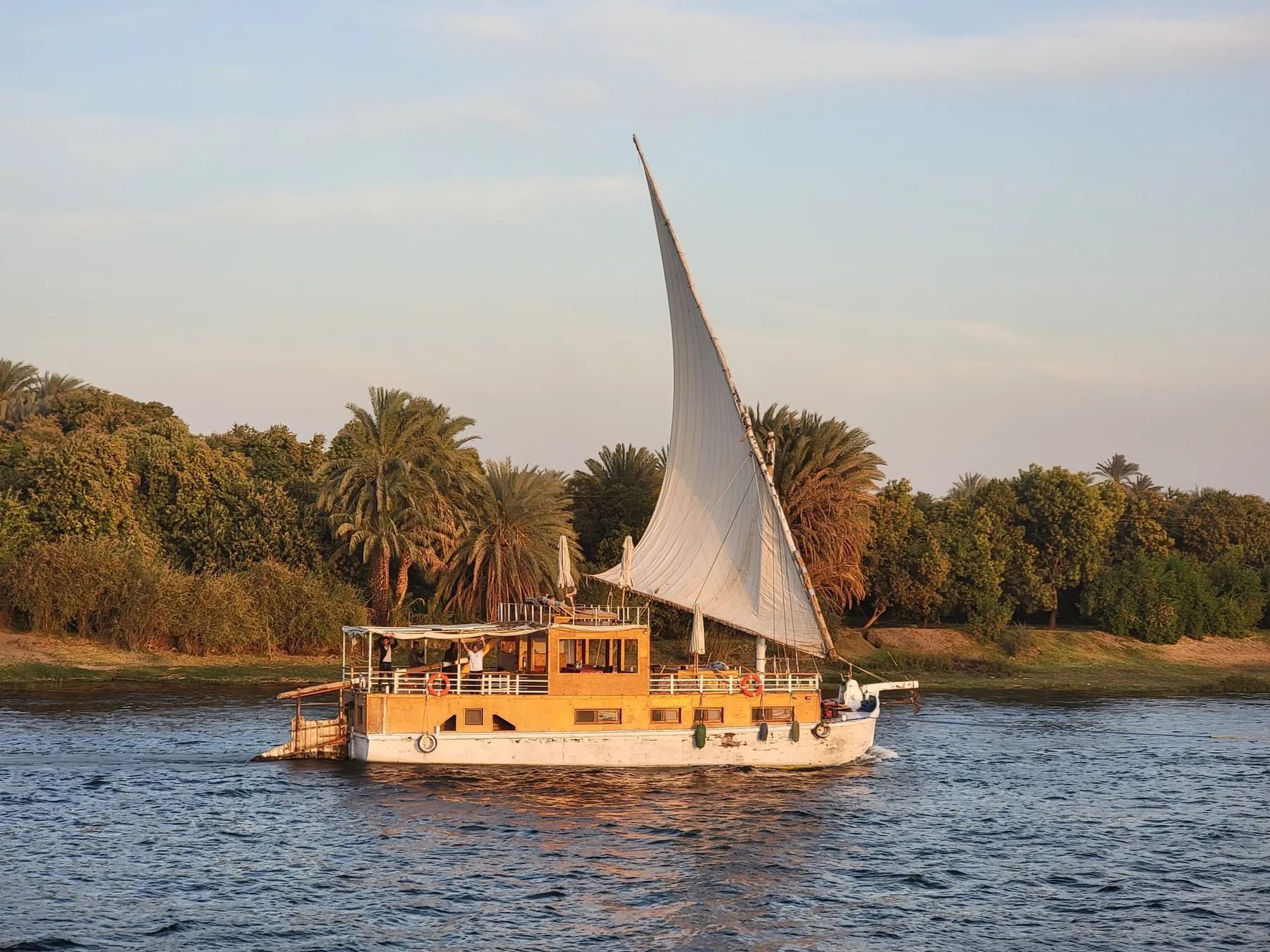 Photo: Votpuske, CC BY-SA 4.0