
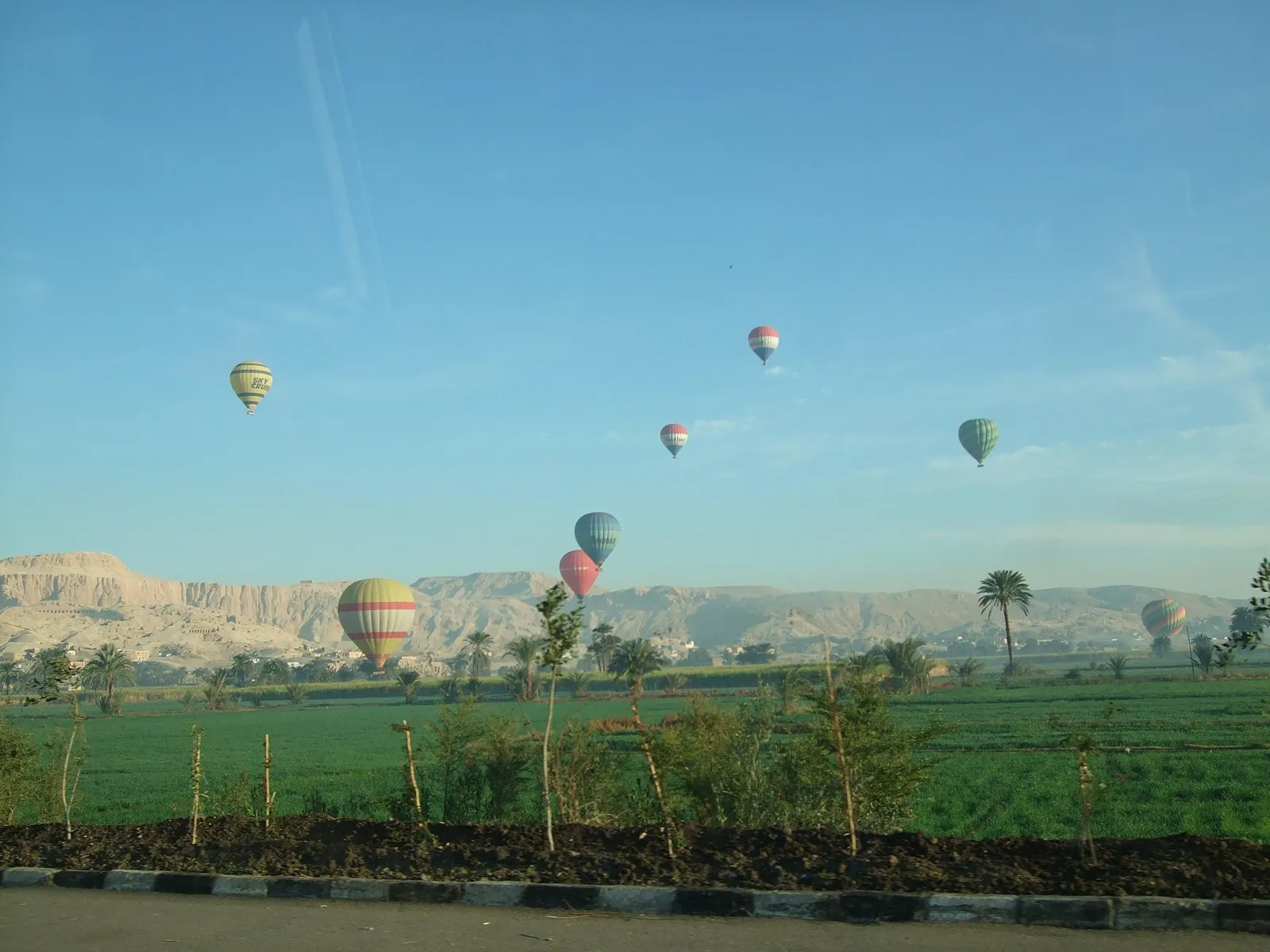
 Photo: Heksamarre, CC BY-SA 4.0
How a Luxor balloon morning works
Hot-air balloons in Luxor fly at dawn only, from a dedicated balloon airfield on the West Bank, and drift over the farmland, villages and temples between the Nile and the Theban hills. The pattern described by operators and travel guides in 2026 is very consistent:
- Pickup before dawn. Expect a knock or a call at your hotel somewhere between about 03:15 and 04:45, depending on the season and on sunrise time (as of May 2026, according to Pyramids Land).
- Across the Nile. From an East Bank hotel you are usually driven to a pier on the Corniche, cross by motorboat in about ten minutes, then ride a minibus to the launch field. From a West Bank hotel the crossing is skipped and the drive is short.
- Inflation and briefing. The balloons are laid out and inflated with fans and burners while the pilot explains how to stand and how to brace for landing.
- The flight. Most flights last roughly 45 to 60 minutes in the air. You stand the whole time. The route depends on the wind, so nobody can promise you will pass directly over a particular temple.
- Landing and return. Balloons come down in fields or open desert, the ground crew catches the basket, and you are driven back. The whole outing usually takes about three hours, so you are back at your hotel in time for breakfast.
Baskets vary a lot. A Youm7 report from May 2026 says Luxor's operators use eight basket models carrying from 2 up to 32 passengers. Standard shared flights typically carry 16 to 24 people; smaller baskets are sold as "private", "VIP" or "premium" flights.
Who regulates the flights
Balloon flights in Luxor come under Egypt's Civil Aviation Authority (ECAA), part of the Ministry of Civil Aviation. Three facts are well documented:
- The authority decides each morning whether anyone flies. When the forecast or the morning wind is not suitable, flights are cancelled for every company at once. In May 2026, for example, Youm7 reported that the Civil Aviation Authority cancelled all flights for four consecutive days because of strong early-morning winds.
- Take-off is restricted to one balloon airfield. After a series of crashes in 2009, new rules limited the number of balloons in the air at the same time and moved all take-offs to an airfield used only by hot-air balloons (summarised on Wikipedia).
- Flights are tracked. After a balloon drifted far off course in June 2019, flights were suspended for about 80 days; when they resumed, the authority required tracking devices and cameras so that each flight's route could be followed by GPS from take-off to landing (Egypt Independent, Sept 2019).
How strict is the wind limit? We have not found an official published number. A 2022 Al-Bawaba report on the resumption of flights said they need clear skies and wind of no more than 8 knots; operators' own websites give similar figures. Treat this as an indication, not a rule you can check yourself.
The safety record, in plain terms
Ballooning over Luxor has a real accident history, and it is better to know it than to read it after booking. The main incidents in public records:
- February 2009: several crashes over a short period, with injuries; flights were suspended for six months while pilots were retrained.
- 26 February 2013: the worst accident. A leak in a fuel line caught fire as a balloon was about to land; 19 of the 21 people on board died. The Civil Aviation Authority's final report (January 2014) blamed the leaking fuel line, which had been in use since 2005 (Wikipedia summary). All balloon flights in Egypt were suspended and resumed some weeks later under new controls.
- 2016 and January 2018: crashes with injuries; in 2018 high winds caused a pilot to lose control and one tourist died.
- June 2019: a balloon was pushed off course and landed in the desert; everyone was found safe, followed by the long suspension and the tracking rule mentioned above.
- July 2022: wind pushed one balloon into another; one balloon was torn and came down from about 60 metres. Two of the 28 passengers had minor injuries (Gulf Today). Flights were suspended, and when they resumed the two companies involved stayed suspended during the investigation.
We have found no reported fatal accident since 2018 as of October 2026, but absence of news is not a safety certificate. The UK Foreign Office advises travellers to talk to their tour company before booking and notes that some UK tour operators have stopped selling balloon flights because they could not verify safety standards (FCDO travel advice). Also check that your travel insurance covers ballooning; many policies list it as an excluded or extra-cost activity.
How much it costs
Prices depend on basket size, season, and whether you book through an international platform, a local agency or your hotel. As of May 2026, Pyramids Land put a standard shared flight with a reputable operator at roughly US$50 to US$130 per person, with private flights for 4 to 8 people at about two to three times that. A UK-based guide revised in March 2026 (Semelegant Voyage) gives £60 to £90 for a shared basket and higher figures for small-basket flights.
Some practical notes on price:
- Hotel pickup and the boat crossing are normally included; photos taken by the crew are usually extra.
- Very cheap offers tend to mean the biggest baskets. If you care about seeing out, ask how many people are in yours.
- Tipping the ground crew is customary; Pyramids Land suggested EGP 50 to 100 per person as of May 2026. See money, tipping and haggling.
What to ask before you pay
- Which company flies the balloon? Many sellers are resellers. Ask for the operating company's name and check that it is the one picking you up.
- How many passengers in the basket? The difference between 8 and 28 people is the difference between leaning on the rail and peering between shoulders.
- What time is pickup, and is the boat included? If you stay on the West Bank, ask whether they collect you by road.
- How long in the air? Ask for flight time, not total tour time.
- What happens if the authority cancels? The answer you want: a full refund, or a free move to the next morning, at your choice. Get it in writing.
- Is there passenger insurance? Ask, and still check your own policy.
- Are there age or health limits? Rules for children, pregnancy and mobility vary by operator; you climb into a high basket and must be able to crouch for landing.
Cancellations for wind
Cancellations are normal and nobody can overrule them. Strong morning wind, dust and poor visibility ground every company. In March 2026 strong morning gusts cancelled flights for several days, and in May 2026 they were cancelled four days in a row (Le Petit Journal; Youm7). Semelegant Voyage estimates that 20 to 30% of March flights are cancelled, against 5 to 10% from November to February: treat that as one operator's estimate, but the pattern matches what local news reports.
Summer is different again. In 2026 the Civil Aviation Authority suspended all Luxor balloon flights from 1 June to 31 August because of heat, thermal turbulence and changing winds, with flights expected to resume in September (Le Petit Journal, May 2026). If you travel in summer, check whether a similar pause applies that year before you plan around a flight.
Two simple rules follow from this:
- Book the balloon for your first full morning in Luxor, so a cancellation can move to the next day. The Luxor in 3 days plan leaves room for this.
- Beware of a "cancellation" that only affects your operator. When the authority grounds flights, no balloon is in the sky. If you see others flying, ask for a refund the same day.
For the months with the calmest mornings, see the best time to visit.
Where to stay if the balloon is a priority
Every operator collects from East Bank hotels, so you do not need to choose a hotel for the balloon. But a West Bank base shortens the morning: from the riverside village area at Al Bairat, Nile Castle and Luxor Oasis Guest House are on the same side as the launch field, and Al Moudira sits at the edge of the desert where many balloons drift. If you prefer the big Corniche hotels, such as Sonesta St. George, expect the earliest pickup and the boat crossing. Our page on where to stay in Luxor compares the areas.
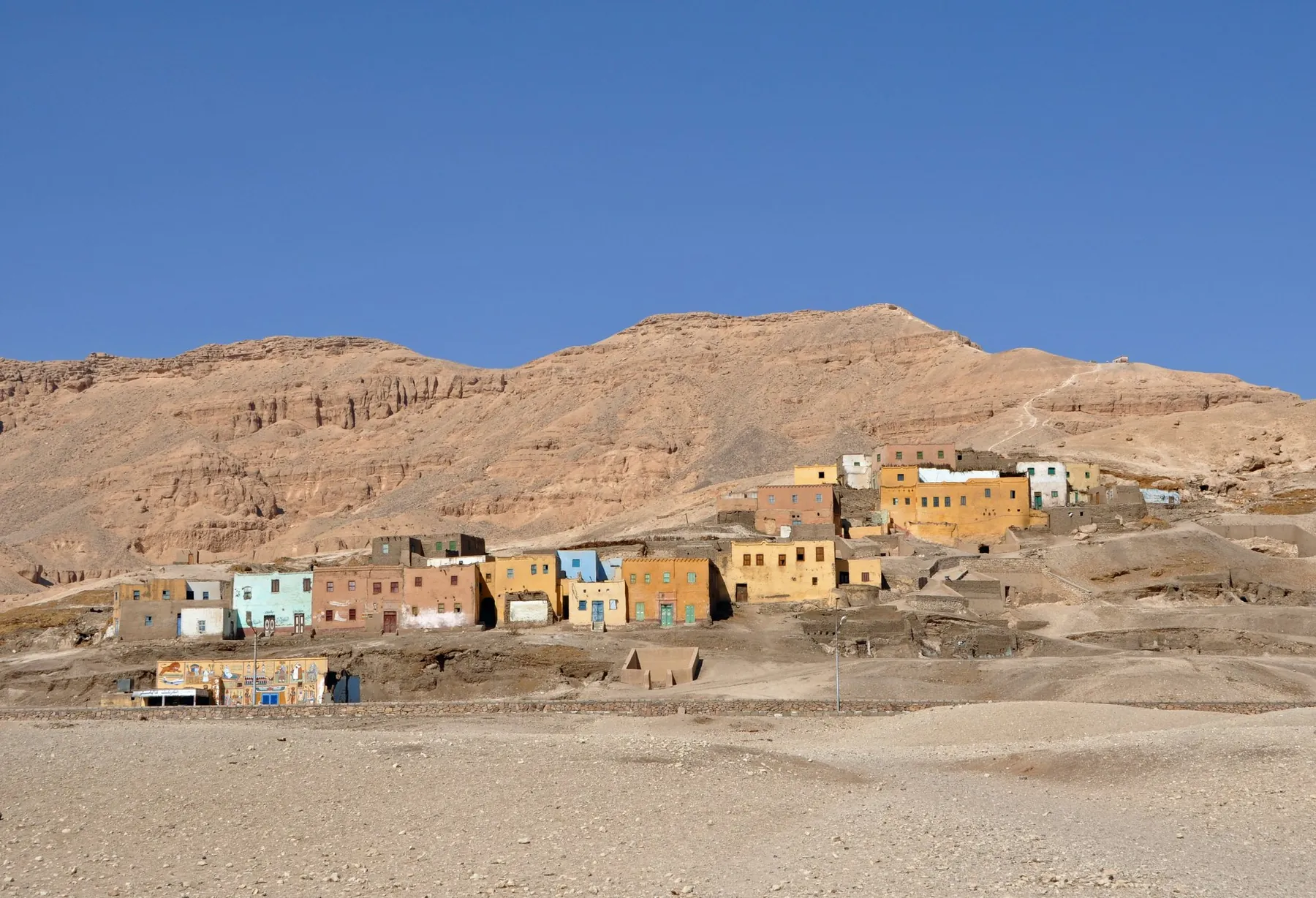 Area photo: Marc Ryckaert (MJJR), CC BY 3.0
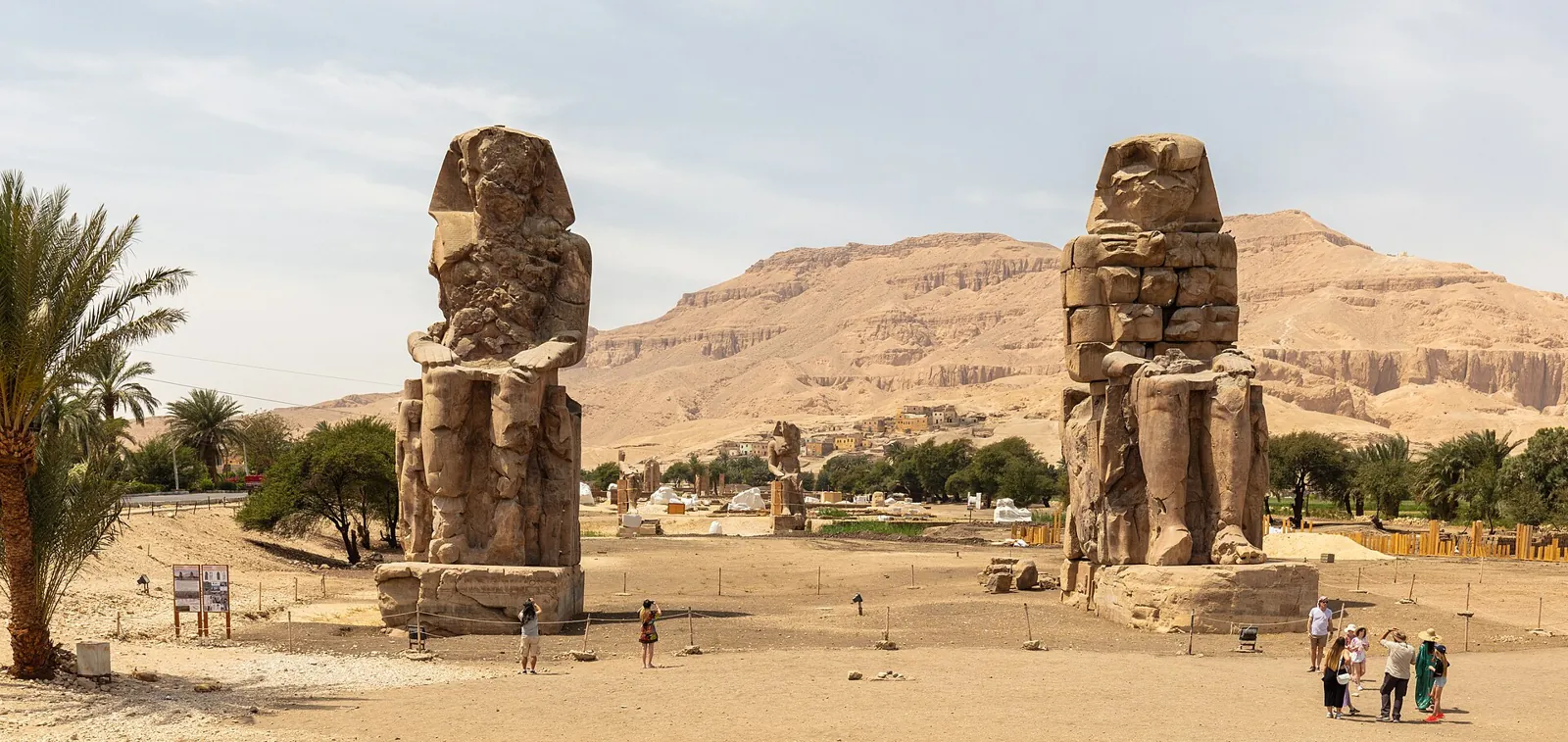 Area photo: Diego Delso, CC BY-SA 4.0
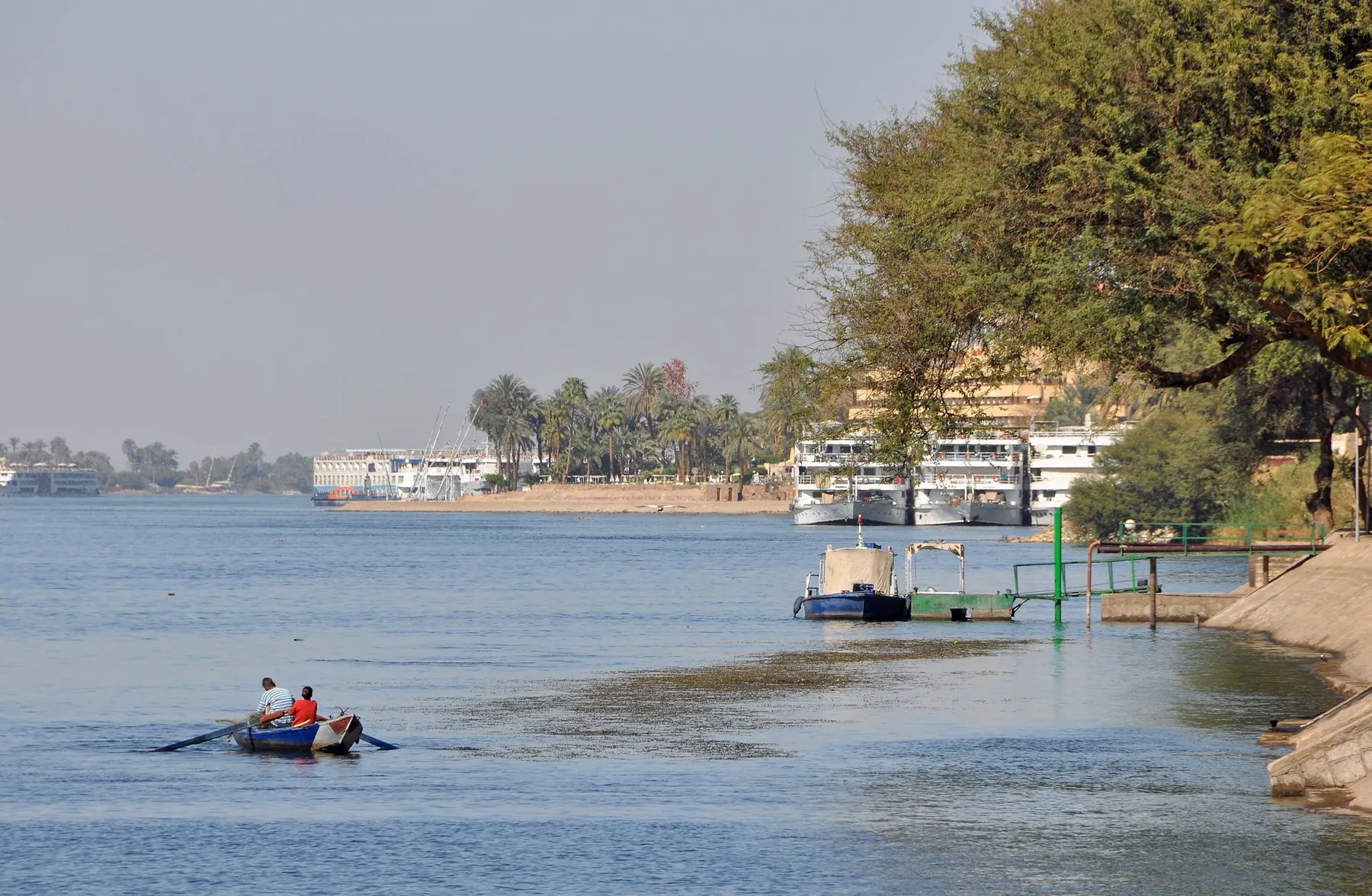 Area photo: Marc Ryckaert (MJJR), CC BY-SA 1.0
 Photo: MusikAnimal, CC BY-SA 4.0
 Photo: Ad Meskens, CC BY-SA 3.0
 Photo: Votpuske, CC BY-SA 4.0