
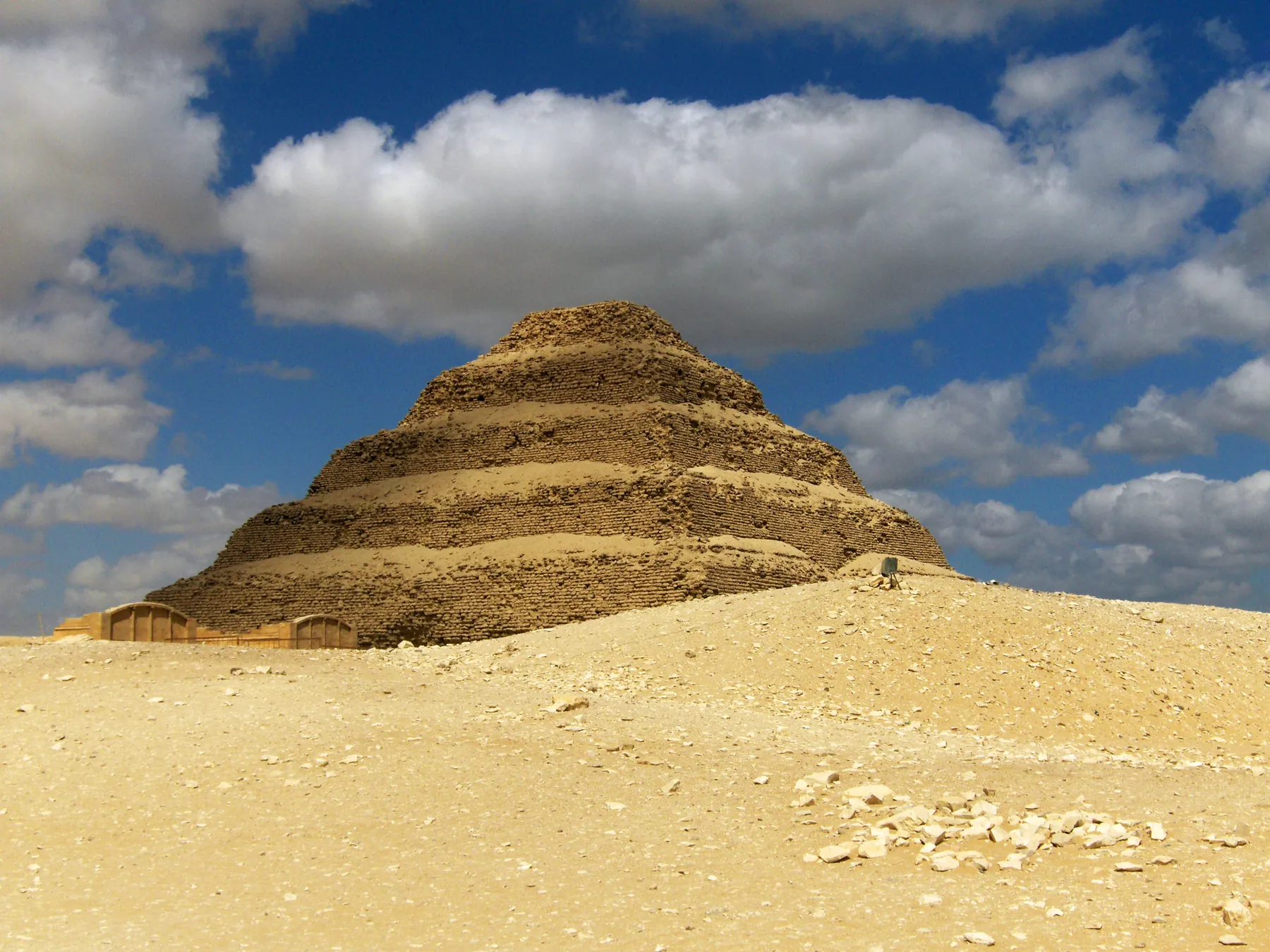
 Photo: Gary Ku from New Haven, CT, USA, CC BY-SA 2.0
South of Giza, along the edge of the desert, runs a line of older and much quieter pyramid fields. Saqqara has the Step Pyramid of Djoser, the first large stone building in history, and some of the finest painted tombs in Egypt. Dahshur, a little further south, has the Bent and Red Pyramids, the experiments that led to the Great Pyramid. Between them, in the palm groves, lie the remains of Memphis, the old capital. Together they make one of the best day trips from Cairo.
This guide covers what to see, the official ticket prices, how to get there without a tour and how to fit it all into a day. Prices change with little notice; check the Ministry of Tourism and Antiquities site before you go.
The short answer
- Hire a car and driver for the day. Public transport does not reach the sites, and ride-hailing apps can drop you off but are unreliable for the way back.
- Allow five to seven hours from central Cairo or Giza for all three sites, including about three to four hours on the ground.
- Start at Dahshur, the furthest south, and work your way back north through Memphis and Saqqara.
- Pick your Saqqara extras. The site ticket is only the start; the Serapeum, the Step Pyramid interior and the best tombs are paid separately.
Where the sites are
- Saqqara is about 25 km south of the Giza plateau, on the desert ridge above the Nile valley. It was the main burial ground of Memphis for some 3,000 years.
- Memphis (Mit Rahina) is a village a few kilometres east of Saqqara, in the valley. The capital itself has almost disappeared; what you visit is a small open-air museum.
- Dahshur is about 10 km south of Saqqara and roughly 40 km from central Cairo. It is a military zone with a public area around two pyramids, so it stays quiet.
By car, Saqqara and Dahshur are usually about an hour from Downtown or Giza, depending on traffic, and 15–20 minutes from each other.
Tickets
| Ticket (foreign visitors) | Adult | Student | As of |
|---|---|---|---|
| Saqqara site (includes Imhotep Museum) | EGP 600 | EGP 300 | October 2026 |
| Step Pyramid of Djoser (interior) | EGP 280 | EGP 140 | October 2026 |
| Serapeum | EGP 340 | EGP 170 | October 2026 |
| Tomb of Mereruka | EGP 200 | EGP 100 | October 2026 |
| Nobles' tombs and New Kingdom tombs | EGP 400 | EGP 200 | October 2026 |
| Southern Tomb in the Djoser complex | EGP 300 | EGP 150 | October 2026 |
| Saqqara inclusive ticket | EGP 1,400 | EGP 700 | October 2026 |
| Dahshur site (Red and Bent Pyramids) | EGP 200 | EGP 100 | October 2026 |
| Memphis open-air museum | EGP 200 | EGP 150 | December 2025 report |
The Saqqara and Dahshur prices come from the Ministry's official pages. The inclusive ticket for Saqqara covers the site, the Imhotep Museum, the nobles' tombs, the New Kingdom tombs, the tomb of Mereruka and the tomb of Mehu; according to the official page it does not include the Serapeum or the Step Pyramid interior, which you would add separately. Do the maths before you buy: if you only want the Serapeum and one or two tombs, separate tickets are cheaper.
Dahshur's ticket includes going inside the Red Pyramid and, when it is open, the Bent Pyramid. Car parking at the sites costs a small extra fee. Ticket counters increasingly take cards only, so carry a card and some small cash for parking, toilets and the guardians who open tombs.
Opening hours. Saqqara is open 08:00–16:00 daily; the Ministry lists Dahshur as 08:00–17:00, but recent visitor reports say 16:00, so plan to be there before then (as of October 2026).
Saqqara: what to see
Saqqara is spread over several kilometres of sand, and you will drive between its sections. In about two to three hours you can see:
- The Step Pyramid of Djoser. Built around 2650 BC by the architect Imhotep, it is six stacked levels of stone and the ancestor of every later pyramid. The enclosure, with its colonnade and courtyard, is part of the site ticket; the interior, with its shafts and blue-tiled chambers, needs the extra ticket.
- The Imhotep Museum. A small museum at the entrance with finds from the site. Worth 20–30 minutes, and a good place to start.
- The Pyramid of Unas. A modest pyramid from the outside, but inside are the Pyramid Texts, the oldest known religious inscriptions in Egypt. Access to the interior has varied; one 2026 report says entry closes at 12:00, so go there first if it matters to you.
- The Serapeum. Long underground galleries cut into the rock where the sacred Apis bulls were buried in enormous granite sarcophagi, some weighing around 70 tonnes. It is one of the most impressive places in the Cairo area.
- The tombs of the nobles. Mereruka, Kagemni, Ti and others show daily life in carved and painted relief: fishing, farming, crafts and animals, with a detail that Giza does not have. Mereruka's is the largest.
If you only have time for two extras, most travel writers point to the Serapeum and one of the painted nobles' tombs.
Memphis: a short stop
The open-air museum at Mit Rahina holds what is left of the ancient capital: a colossal limestone statue of Ramesses II lying on its back, an alabaster sphinx and scattered statues in a garden. You need 45 minutes to an hour. It is the easiest stop to drop if you are short of time or energy.
Dahshur: the Red and Bent Pyramids
Dahshur is where the pharaoh Sneferu, Khufu's father, worked out how to build a true pyramid.
- The Bent Pyramid changes angle halfway up, probably because the builders realised the original slope was too steep. It keeps much of its original smooth limestone casing, which gives a good idea of how the Giza pyramids once looked.
- The Red Pyramid was built next, at a lower angle, and is the first successful smooth-sided pyramid. Its name comes from the colour of the stone.
You can go inside both when they are open, at no extra cost (as of December 2025). Expect an outdoor climb to the entrance, then a long, low passage of about 60 metres in the Red Pyramid and around 80 metres in the Bent Pyramid, walked bent over on a wooden ramp. The air is warm, stuffy and has a strong smell of ammonia, and climbing back up is tiring. Skip it if you have claustrophobia or knee, back or heart problems. An attendant at the Red Pyramid may offer to take photos and expect a small tip.
Allow one to one and a half hours for both pyramids. With few visitors, Dahshur is also the place to see a pyramid in an empty desert landscape.
Getting there and around
- Private car with driver. The most practical option. Your hotel can arrange one, or you can book a driver for the day through a local company. Reported prices vary: one December 2025 report gives around EGP 500–750 for a day with a taxi driver, while a 2026 report gives EGP 1,000 for a taxi with no time limit, plus a tip. Prices through hotels and agencies are usually higher. Agree the route, the number of hours and whether parking and waiting are included before you set off.
- Ride-hailing (Uber, Careem, inDrive). You can get to Saqqara this way, but finding a car back is difficult, and moving between three sites in the countryside is not realistic. If you use the app, consider asking the same driver to wait for an agreed price.
- Organised tours. Many tours combine Giza, Saqqara and Dahshur in a day, sometimes with Memphis. It is a long day, and the time at each site can be short. A private tour with an Egyptologist gives you more context, especially in the tombs.
A sample day
- 08:00 Leave Downtown, Zamalek or Giza.
- 09:00 Dahshur: Red Pyramid, then the Bent Pyramid.
- 10:45 Memphis open-air museum.
- 11:45 Saqqara: Imhotep Museum, Step Pyramid, Serapeum and one or two tombs.
- 14:30–15:00 Back in Cairo or Giza.
Some travellers add Giza the same afternoon; it is possible, but it makes for a rushed day. A better plan for most people is Giza and the Grand Egyptian Museum on one day and Saqqara and Dahshur on another. See visiting the Pyramids of Giza and Cairo in 3 days.
Where to start from
Staying in the Pyramids area, around Nazlet el-Samman and Al Haram, cuts some time off the drive south, and hotels there, from the Marriott Mena House to small places such as Mamlouk Pyramids, are used to arranging drivers. From Downtown or Zamalek, leave early to avoid the morning traffic. Our where to stay in Cairo page compares the areas.
Before you go
- Bring water, sun protection and a hat: there is little shade at any of the three sites.
- Carry a torch or use your phone's light inside the pyramids.
- Bring your passport, especially for Dahshur, which is next to a military area.
- Keep small notes for parking, toilets and tips; read our guide to money, tipping and haggling.
- Ignore anyone at the sites who offers unofficial camel rides or "special access"; see common scams in Egypt.
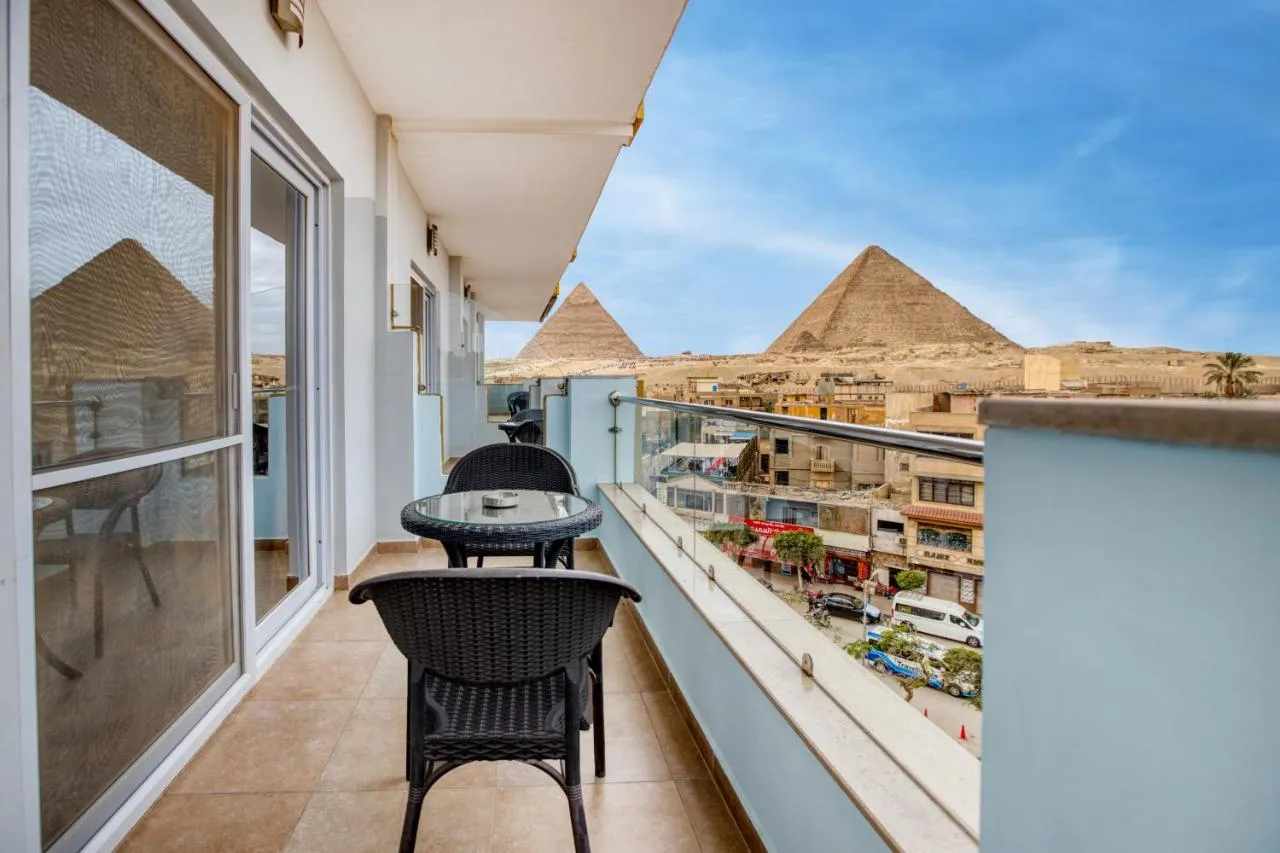 Photo: Booking.com
 Photo: MusikAnimal, CC BY-SA 4.0
 Photo: Ad Meskens, CC BY-SA 3.0
 Photo: Votpuske, CC BY-SA 4.0