
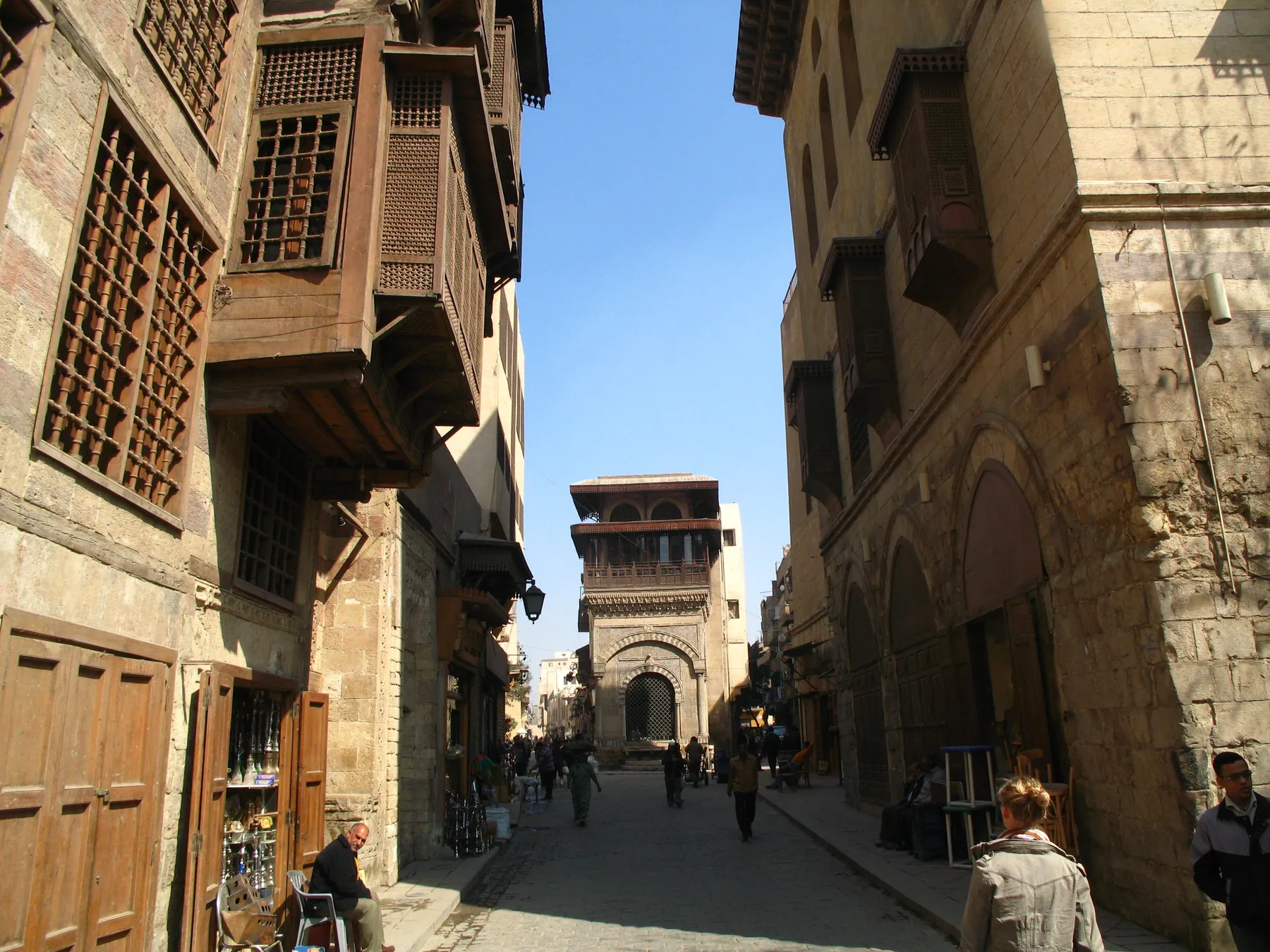
 Photo: Joonas Plaan from Tallinn, Estonia, CC BY 2.0
What "Islamic Cairo" means
Islamic Cairo, also called historic Cairo, is the old walled city founded by the Fatimids in 969 and the districts that grew around it under the Ayyubids, the Mamluks and the Ottomans. UNESCO added Historic Cairo to the World Heritage List in 1979. It is not a museum quarter: people live, work and pray here, and the monuments sit between workshops, cafés and market stalls.
For a visitor it falls into three parts: Al-Muizz Street and Khan el-Khalili in the north, around the old Fatimid gates; Al-Azhar just to the east of the bazaar; and the Citadel, Sultan Hassan and Al-Rifai about 2 km to the south, on and below the Muqattam hill. Al-Azhar Park lies between them on the eastern edge. A full day covers the highlights; two half days are more comfortable.
Tickets
Most of the monuments are run by the Ministry of Tourism and Antiquities. Prices for foreign adults:
| Site | Ticket (EGP) | Hours | Source, date |
|---|---|---|---|
| Al-Muizz Street, combined ticket | 220 | 9:00–17:00 | Ministry, October 2026 |
| Bab Zuweila | 100 | 9:00–17:00 | Ministry, October 2026 |
| Cairo Citadel | 550 | 8:00–17:00 | Ministry, October 2026 |
| Sultan Hassan and Al-Rifai mosques | 220 | check on site | Ministry list, November 2024 |
| Bayt al-Suhaymi | 220 | check on site | Ministry list, November 2024 |
| Wikala of al-Ghuri | 100 | check on site | Ministry list, November 2024 |
Students pay half with a valid card. The Al-Muizz combined ticket covers the Qalawun complex, the madrasa and mosque of al-Nasir Muhammad, the mosque of Sultan Barquq, the palace of Amir Bishtak, the Inal bath, the al-Kamil school, the Suleyman Agha al-Silahdar mosque and the Musa bin Maimun (Maimonides) synagogue. Bayt al-Suhaymi and Wikalat Bazaraa are not included and have their own tickets, according to the ministry. Buy the combined ticket at the first ticketed monument you reach and keep it with you, since each site checks it.
The last three prices in the table come from the ministry's ticket list dated November 2024, which was the newest version we could find for those sites; they may have risen since. The Al-Azhar Mosque is a working mosque and does not appear on the ministry's ticket list.
Al-Muizz Street
Al-Muizz Street runs about a kilometre from Bab al-Futuh, the northern gate, to Bab Zuweila in the south. It takes its name from the Fatimid caliph al-Muizz li-Din Allah, and the ministry counts 29 monuments along it from the 10th to the 19th centuries. The northern half, between Bab al-Futuh and Khan el-Khalili, is pedestrianised in parts and the easiest to walk.
The highlights, from north to south:
- The Mosque of al-Hakim, just inside the northern walls, a large Fatimid courtyard mosque.
- Bayt al-Suhaymi, on a lane off the street (Darb al-Asfar), an Ottoman-era merchant's house with a courtyard garden, wooden screens and reception rooms.
- The Qalawun complex, with its hospital, madrasa and mausoleum, and next to it the madrasa of al-Nasir Muhammad and the mosque of Barquq. Together they form the most impressive run of Mamluk facades in the city.
- The Al-Ghuri complex, where the street crosses Al-Azhar Street, a pair of buildings from the last years of Mamluk rule.
Bab Zuweila
Bab Zuweila is the southern gate of the Fatimid city, built in 1092 by the vizier Badr al-Gamali. About three centuries later the Mamluk sultan al-Muayyad Shaykh set the two minarets of his neighbouring mosque on the gate's towers (1415–1421). The ticket (EGP 100, as of October 2026) lets you climb up inside the gate, and the minarets give one of the best views over the rooftops of the old city. South of the gate, the covered Street of the Tentmakers (Khayamiya) is where appliqué textiles are still sewn by hand.
Khan el-Khalili
The bazaar takes its name from a caravanserai built between 1382 and 1389 by Jaharkas al-Khalili, master of the stables under Sultan Barquq. Today it is a maze of lanes between Al-Muizz Street and the Al-Hussein mosque, selling lamps, brass, spices, textiles and souvenirs. El-Fishawy, a coffee house said to date from 1773, is the best-known café in the lanes.
Some things to know: prices are not fixed, so compare a few shops before you buy and agree the price before anything is wrapped. Shopkeepers and guides who offer to show you a "special" workshop or perfume factory are usually working on commission. Our guides to money, tipping and haggling and common scams in Egypt cover both.
Al-Azhar Mosque
Al-Azhar was founded by the Fatimid general Jawhar al-Siqilli; work began in 970 and the first Friday prayers were held in 972. It is one of the oldest working mosques in the city and the seat of Al-Azhar University, one of the oldest centres of learning in the Islamic world. The marble courtyard, with minarets from different centuries around it, is the part visitors see. It stands across Al-Azhar Street from Khan el-Khalili, reached by a pedestrian underpass.
Sultan Hassan, Al-Rifai and the Citadel
The Mosque-Madrasa of Sultan Hassan (1356–1363) is one of the largest Mamluk buildings anywhere, with an entrance portal about 38 m high and four vaulted halls around the courtyard, one for each of the four Sunni schools of law. Its southern minaret is the tallest surviving Mamluk minaret. Opposite stands the Al-Rifai Mosque, begun in 1869 and completed in 1912, which holds royal tombs, including those of members of Egypt's last royal family.
From the square, a short walk uphill leads to the Citadel of Saladin, open daily from 8:00 to 17:00 (as of October 2026). Inside are the Ottoman-style Mosque of Muhammad Ali, which dominates the skyline, the Mamluk mosque of al-Nasir Muhammad, the Ottoman mosque of Suleyman Pasha, the Gawhara Palace and the Military and Police museums.
Al-Azhar Park
The park was created by the Aga Khan Trust for Culture on land that had been a rubbish dump for centuries, and it opened in 2005. It covers about 30 hectares. Work on the site uncovered a long stretch of the 12th-century Ayyubid wall, now restored along the park's western edge. The high ground looks over the domes and minarets of the old city to the Citadel, and it is at its best in the late afternoon. There is an entry fee at the gate.
A walking route
A route for one full day, from north to south:
- Bab al-Futuh (start around 9:00). Arrive by taxi or ride-hailing car.
- Al-Hakim Mosque, then south along Al-Muizz Street.
- Bayt al-Suhaymi on Darb al-Asfar.
- The Qalawun complex, al-Nasir Muhammad and Barquq. Buy the combined ticket here.
- Khan el-Khalili for lunch and a coffee.
- Al-Azhar Mosque, across the underpass, outside prayer times.
- The Al-Ghuri complex, then south to Bab Zuweila and up the minarets.
- The Street of the Tentmakers, south of the gate.
- Sultan Hassan and Al-Rifai, about 1.5 km further, walking or by taxi.
- Al-Azhar Park for sunset, a short taxi ride back north.
If you would rather split it, see the Citadel and Sultan Hassan on one morning, when the Citadel opens at 8:00, and walk Al-Muizz Street to Bab Zuweila the next afternoon. The monuments close at 17:00, but the street and the bazaar stay busy into the evening, when the facades are lit.
Dress and mosque etiquette
- Cover shoulders and knees, for everyone. Long trousers or a long skirt and a top with sleeves.
- Women cover their hair inside mosques. Carry a light scarf; some mosques lend robes or scarves at the door.
- Shoes come off before the prayer halls. You can carry them in a bag or leave them with the attendant, who will expect a small tip.
- Visit outside prayer times. Non-Muslim visitors are welcome at the main historic mosques, but not during prayers. Avoid Friday around midday, when the noon prayer and sermon take place.
- Photographs: architecture is fine; do not photograph people praying, and follow any signs.
- Keep your voice down and your phone silent, and do not eat or drink inside.
A modest outfit also makes the walk through the bazaar more comfortable, since much of Islamic Cairo is a conservative, residential area.
Getting there and where to stay
Islamic Cairo has no metro station in its core, so most visitors arrive by Uber, Careem or taxi. Lonely Planet puts the taxi ride from Downtown to Khan el-Khalili at about 30 minutes, longer at rush hour. Downtown, around Tahrir, is the closest of the main hotel areas, with Steigenberger Tahrir and Dior Hotel Downtown among the hotels in this guide. All the areas are compared in where to stay in Cairo.
To fit Islamic Cairo into a wider plan with the pyramids and the Egyptian Museum, see Cairo in 3 days. For the food you will find in the lanes around the bazaar, see what to eat in Egypt.
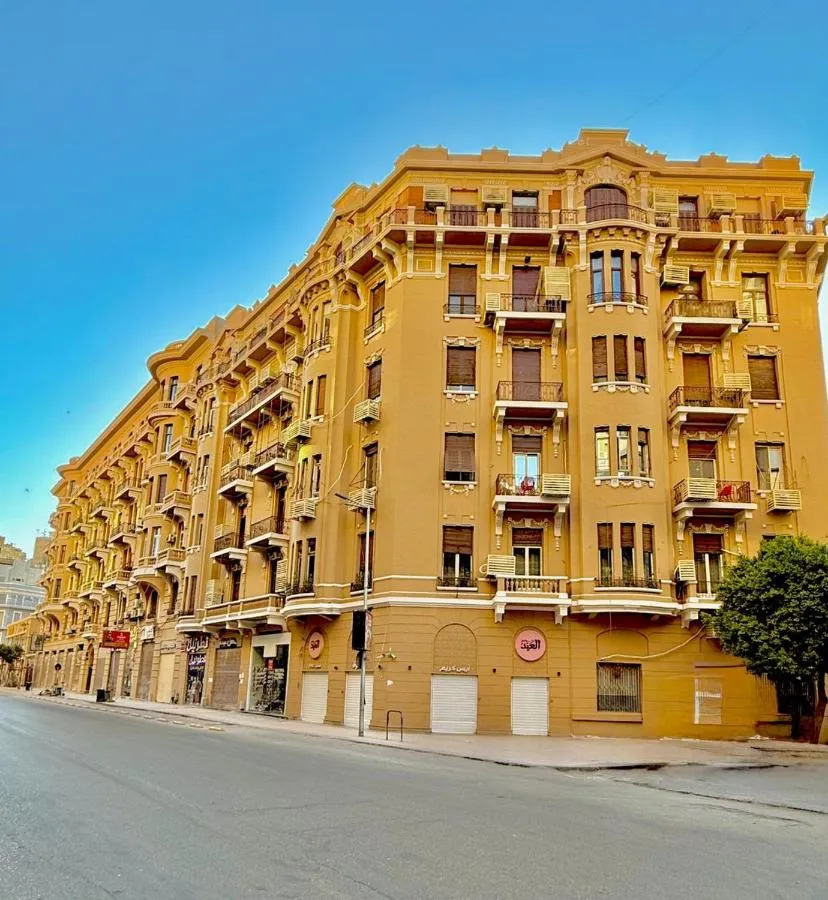 Photo: Booking.com
 Photo: MusikAnimal, CC BY-SA 4.0
 Photo: Ad Meskens, CC BY-SA 3.0
 Photo: Votpuske, CC BY-SA 4.0